Korea a century ago —
stories of the people on one postcard.
Printed by the thousands, written once. Each card here is a real object, held in hand: we read the one who took the picture, the people within it, and the one who sent it, from what is actually written, stamped and pictured on the card. Collected by a Korean language teacher. Sepia Corea takes its name from the tone of old photographs and from Corea, as Korea was spelled a century ago.
백 년 전 한국, 엽서 한 장 속 사람들의 이야기 — 찍은 이의 시선과 찍힌 이의 하루, 부친 이의 안부를 읽습니다. 세피아 코리아(Sepia Corea)는 한국어 교사가 모은 백여 년 전 그림엽서를 실물 그대로, 확인된 사실로 소개합니다.
See the exhibits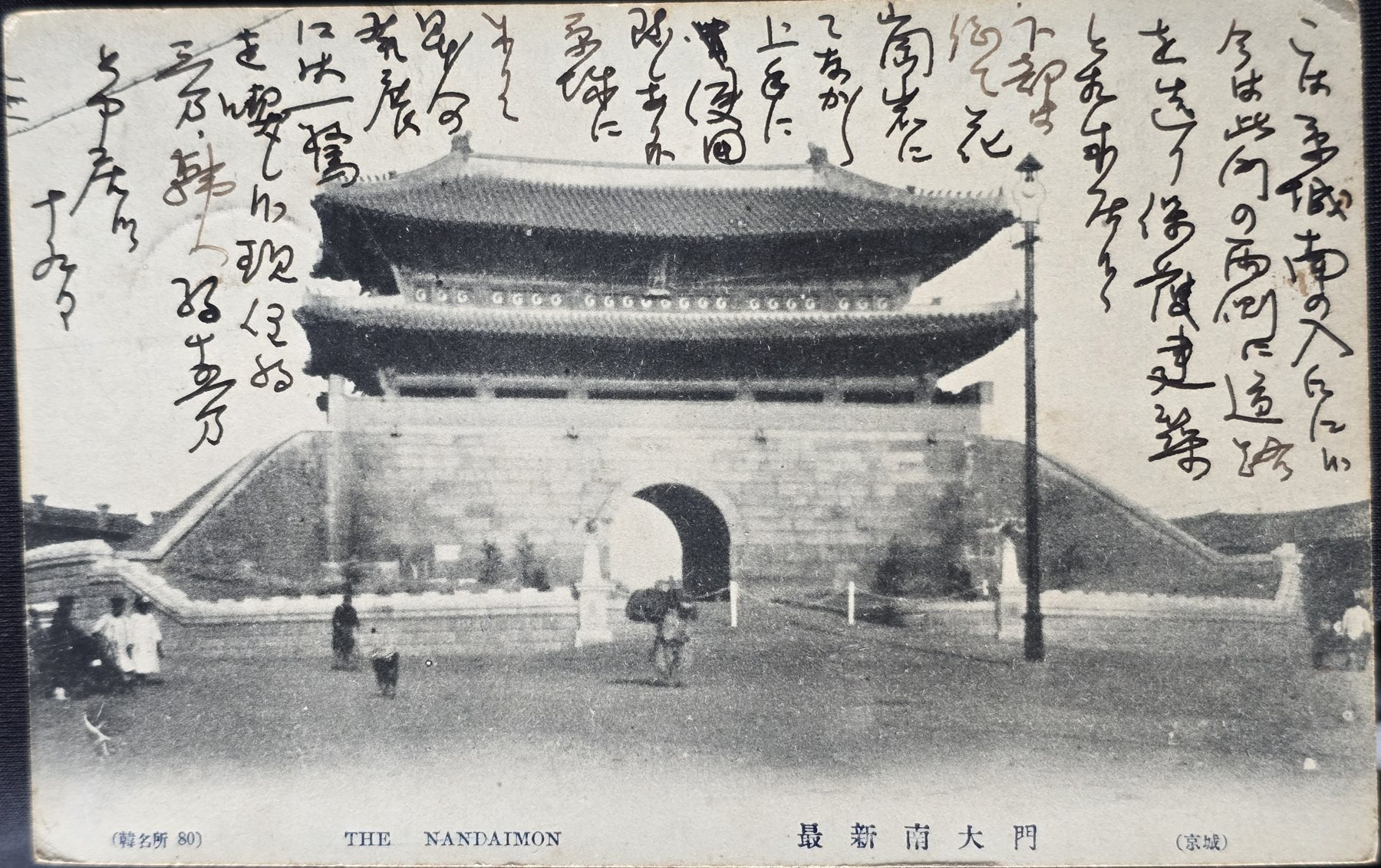
Small cards, honest stories
These postcards were made during Japan's rule over Korea and were often sold as souvenirs of "famous places". Many were mailed home by Japanese visitors and residents. Their pictures show what the publishers wanted to show; their handwriting sometimes shows what the senders actually saw.
이 엽서들은 일제강점기 전후에 '명소' 기념품으로 만들어졌고, 많은 수가 일본인 여행자와 거주자가 고향으로 부친 것입니다. 사진은 발행자가 보여 주고 싶은 것을, 손글씨는 때로 보낸 사람이 실제로 본 것을 담고 있습니다.
Real objects
Every image of a card is a photograph of the card itself. Nothing on the card is generated or altered.
Checked facts
Dates and events are checked against published sources before they go into a video.
Marked uncertainty
Handwriting that cannot be read with confidence is marked tentative. Names are not given until they are confirmed.
Choose a card
엽서를 눌러 전시로 들어가세요.
A witness at the South Gate
From the border, to a geographer
A timetable home from the Diamond Mountains
Guns at the border, blossoms in Seoul
Port Lazarev, inspected
Two women, sent to say congratulations
Two new cards
A witness at the South Gate
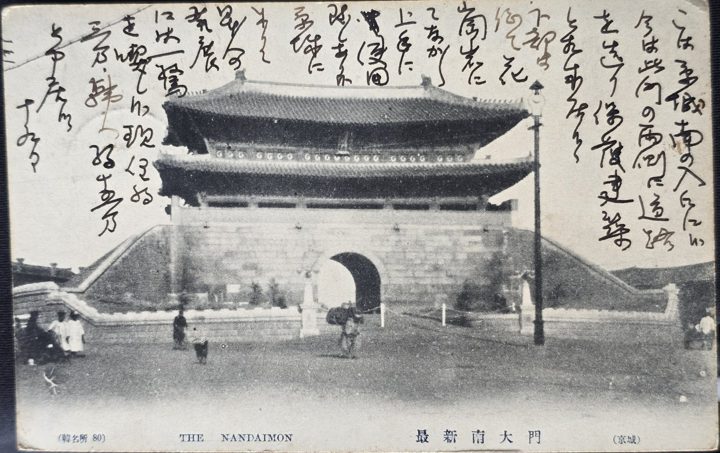
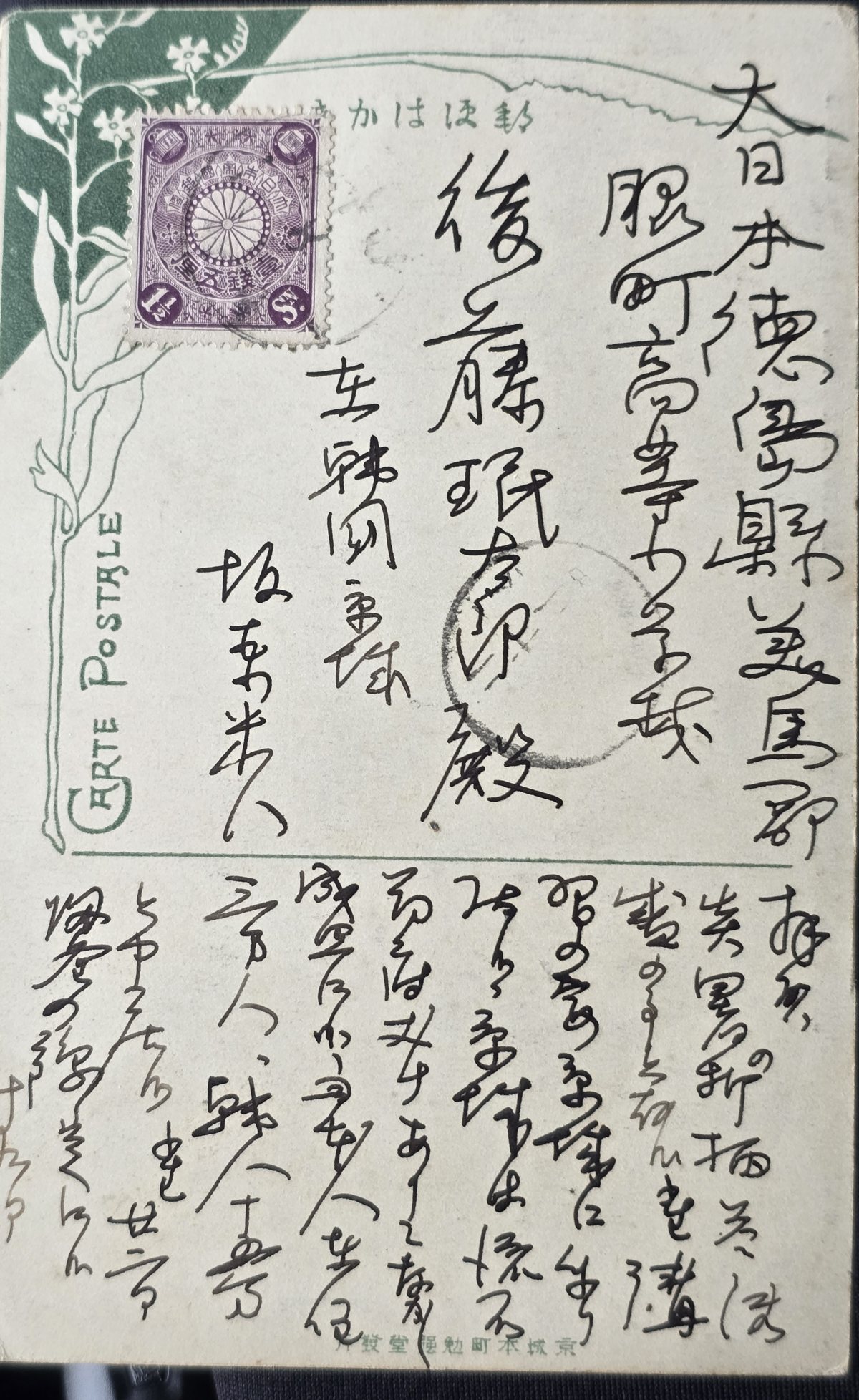
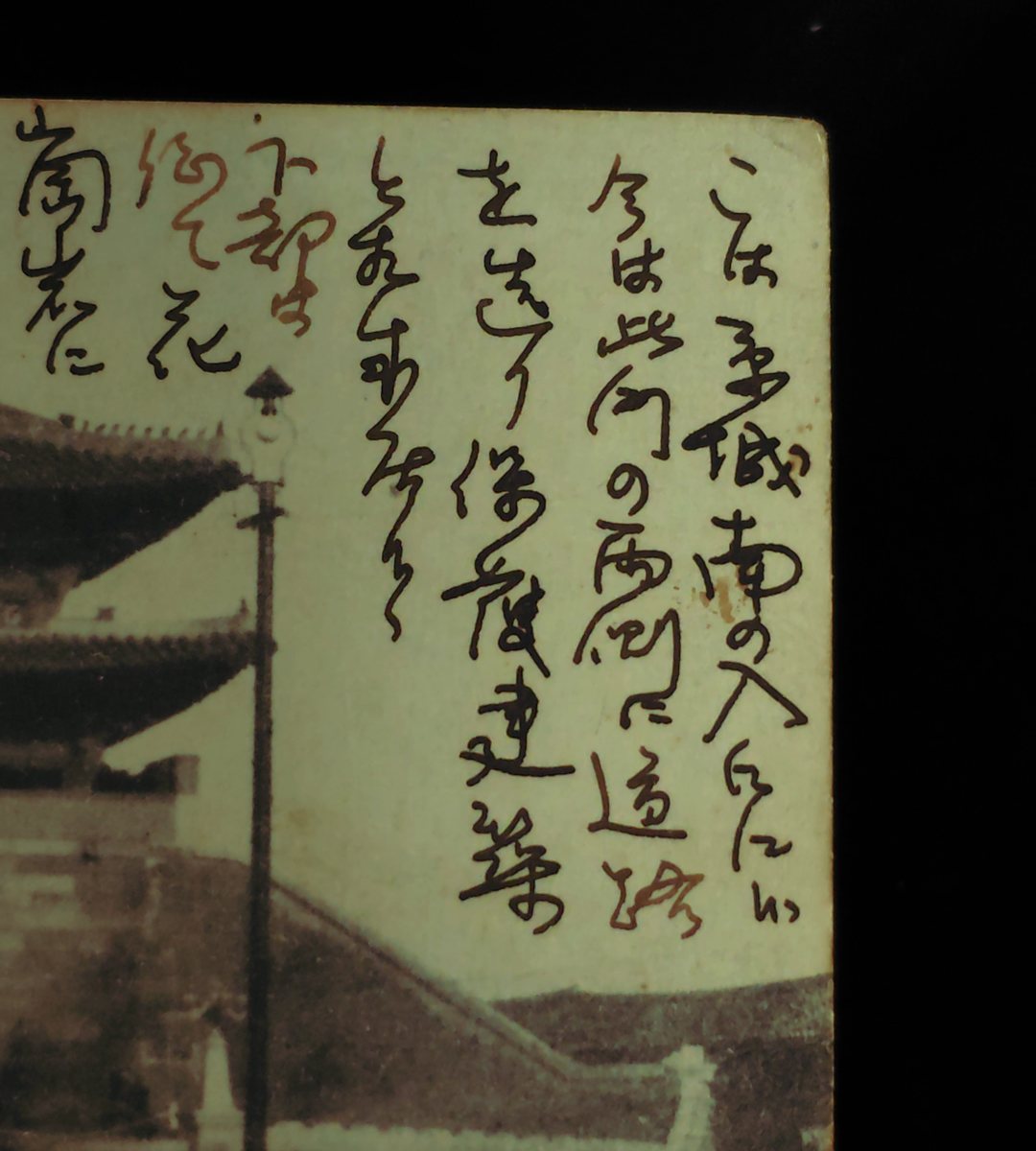
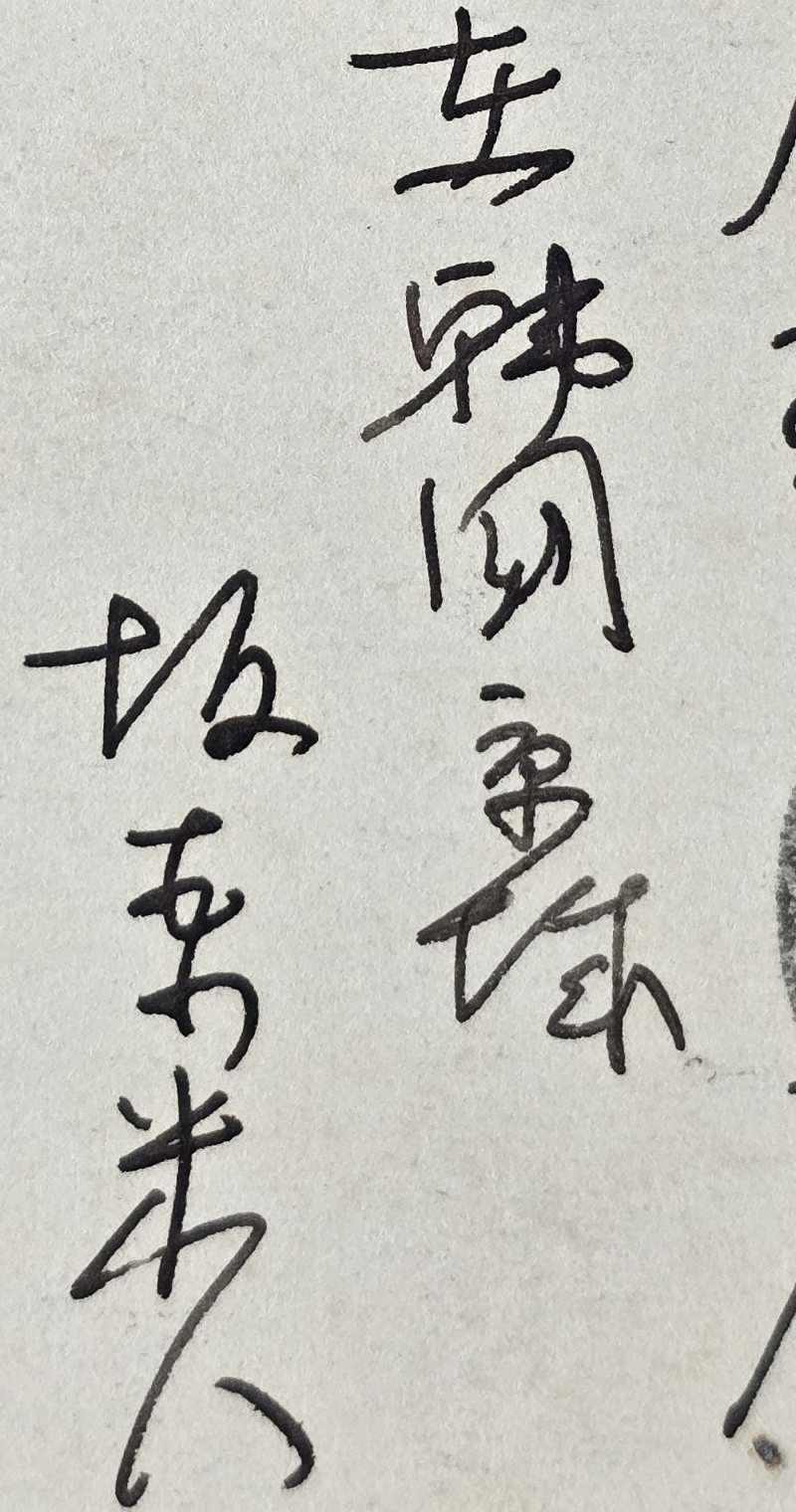
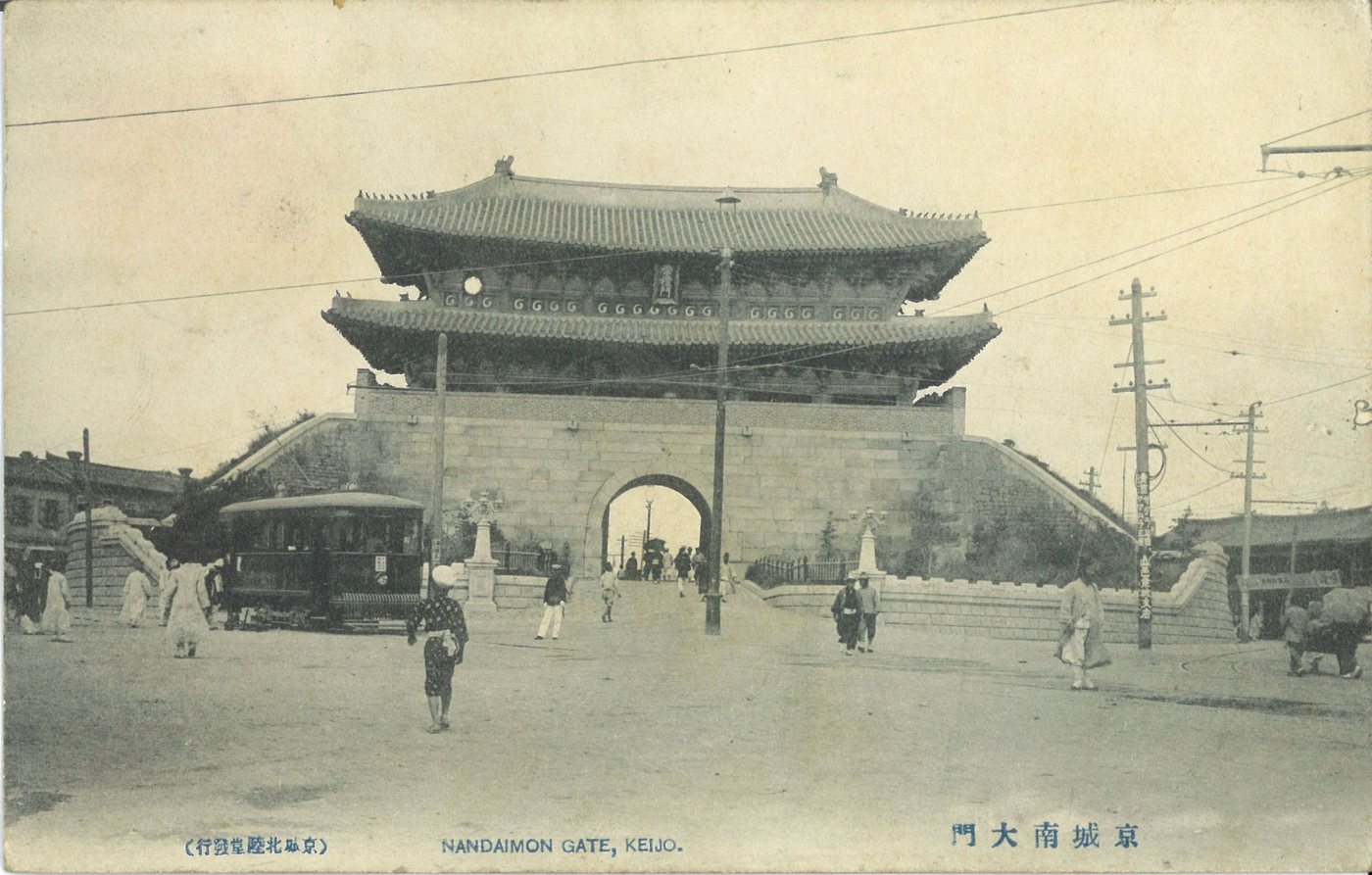
On the front of a souvenir card of Namdaemun, Seoul's Great South Gate, a Japanese sender wrote a few lines in the margin. The second line reads: now there are roads on both sides of this gate. The city walls that had joined the gate for five centuries were cut away for roads and a tramway in 1907–08. The printed photograph shows the gate just after: only sloping stone ramps remain on either side, and the arch is closed off with posts and a rope. The handwriting describes this new view.
남대문 기념엽서 앞면 여백에 일본인 발신인이 몇 줄을 적었습니다. 둘째 줄은 "지금은 이 문의 양쪽에 도로를"이라고 읽힙니다. 인쇄된 사진은 1907~08년 성벽을 헐어낸 뒤의 모습입니다. 문 양옆에는 경사진 석축만 남았고, 홍예 앞은 말뚝과 줄로 막혀 있습니다. 손글씨는 바로 이 새 풍경을 설명하고 있습니다.
「今は此門の両側に道路」 "This is the southern entrance of Seoul… / Now, roads on both sides of this gate…" first two lines only
- DateAbout 1908–1910 (late Korean Empire period) — after the walls beside the gate were cut away in 1907–08, as both the photograph and the handwriting show; before annexation, judging by the "韓名所" series title and the sender's "在韓國" ("in Korea") estimated
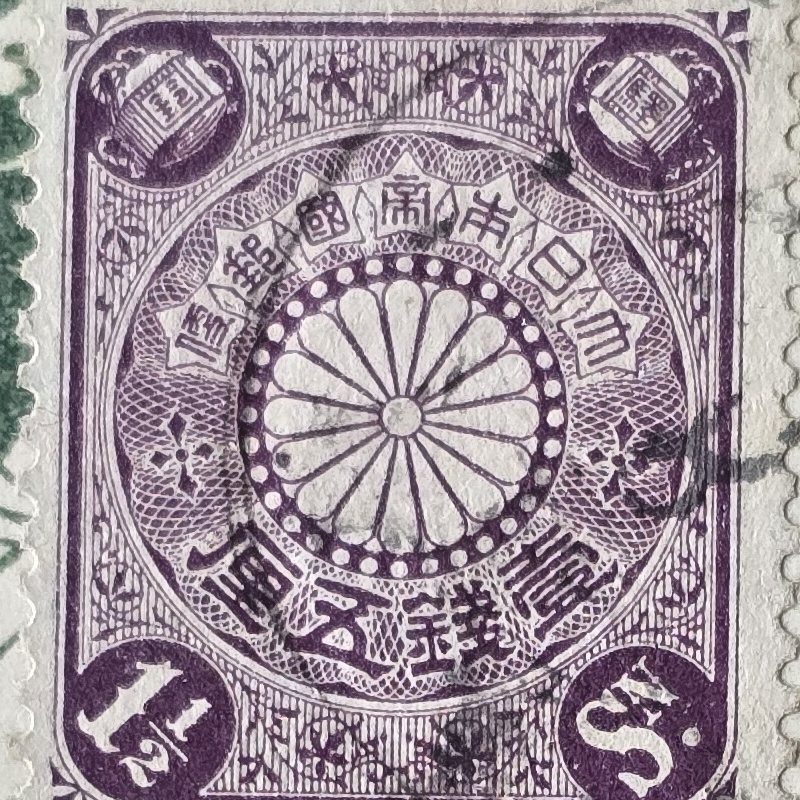
- StampJapanese 1½ sen chrysanthemum stamp. Japan had taken over Korea's postal service in 1905
- SenderSigns from "在韓國" — "in Korea". Name not given here 추정
- Addressed toA higher elementary school, Waki-machi, Mima District, Tokushima, Japan tentative
- SeasonLetter opens 「拝啓 炎暑の折柄」 — written in summer heat
- Publisher京城本町 ○○堂 發行 (Hommachi, Seoul) — name not yet read
- ConditionPostally used; handwriting on both sides
- 1398Sungnyemun (Namdaemun) completed as the south gate of Seoul's city wall
- 1905Japan takes over Korea's postal service
- 1907–08Walls beside the gate demolished for roads and a tramway
- 1910Korea annexed by Japan
- 2008Gate pavilion destroyed by arson (10 February)
- 2013Restoration completed, including short sections of the wall
The third line on the front, the full letter on the back, and the names of sender and recipient are still being read. Corrections and readings from specialists are very welcome.
앞면 셋째 줄, 뒷면 통신문 전체, 발신인·수신인 이름은 아직 판독 중입니다. 전문가의 판독과 정정을 환영합니다.
From the border, to a geographer
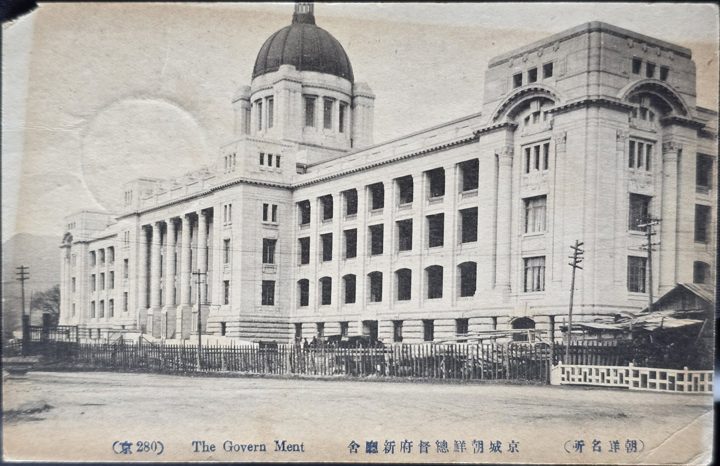
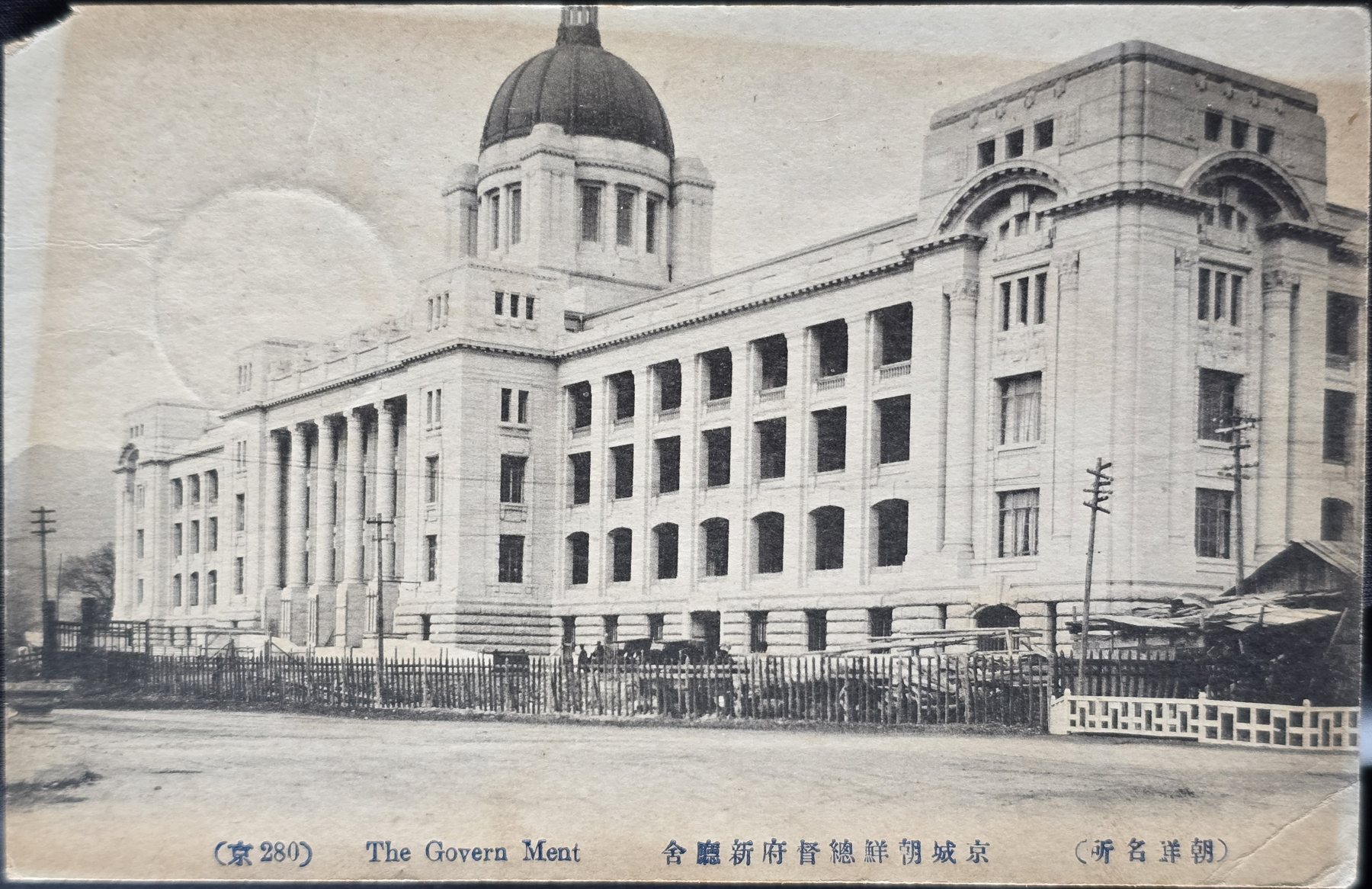
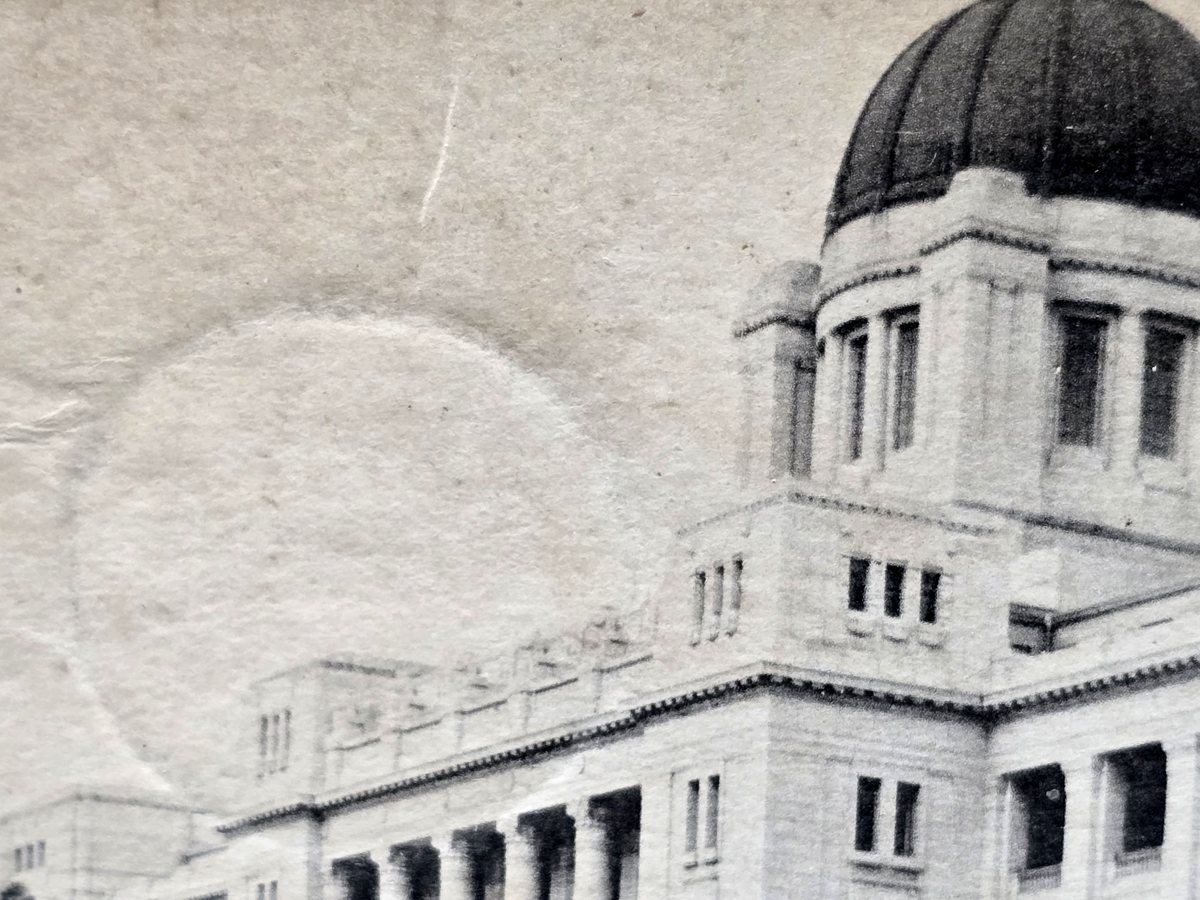
The picture is Japan's new headquarters for its colonial government in Seoul, printed as one of the "Famous Sights of Korea" while the building was still under construction. On the back, in August 1925, a woman travelling with her mother wrote from the Manchurian border to a professor of geography in Nara. She asks after his health, looks forward to his write-up of two journeys, and says nothing at all about the building on the front.
앞면은 공사 중이던 조선총독부 새 청사를 '조선 명소'로 인쇄한 엽서입니다. 1925년 8월, 어머니와 여행하던 한 여성이 만주 국경에서 나라의 지리학 교수에게 이 엽서를 보냈습니다. 안부를 묻고 선생의 여행 원고를 기다린다고 썼지만, 앞면의 건물에 대해서는 한마디도 없습니다.
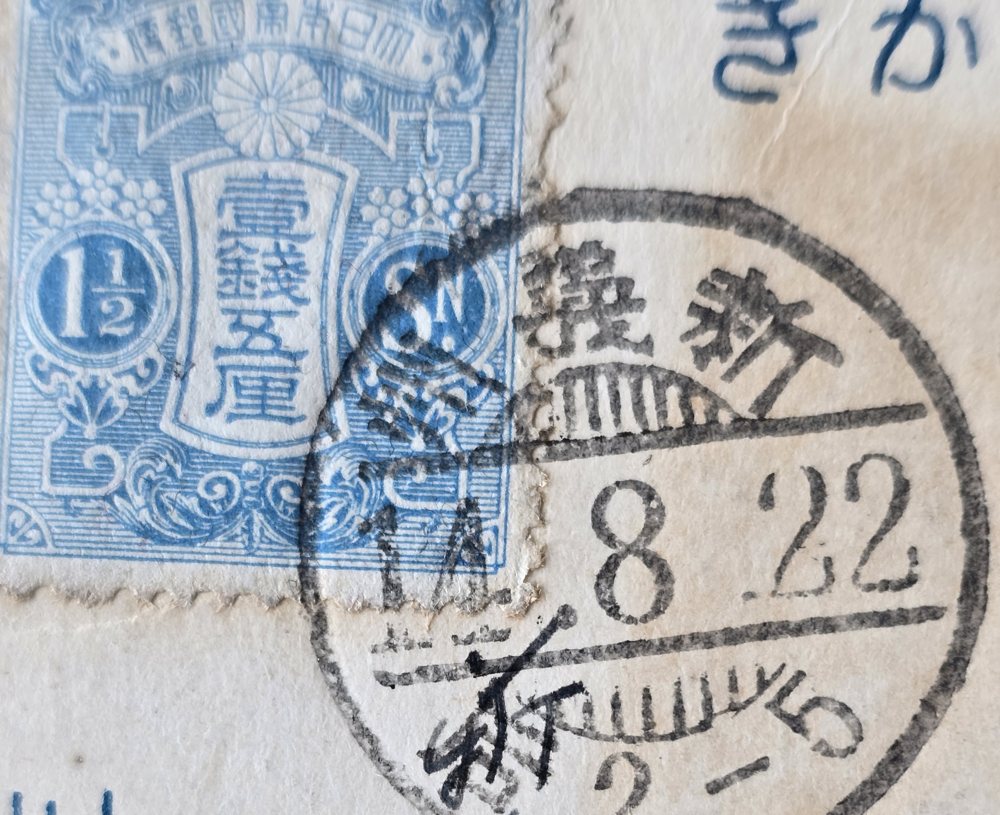
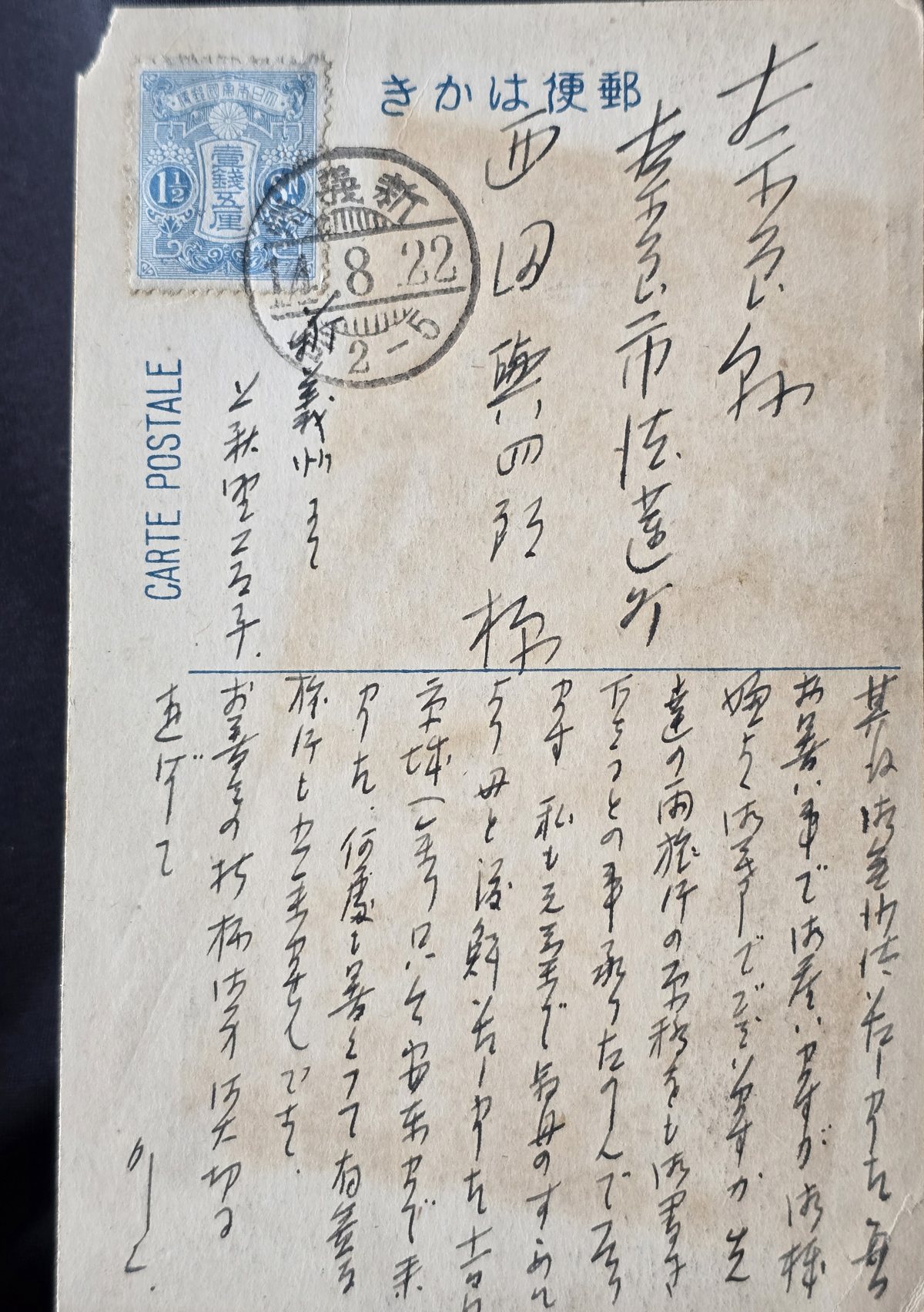
- MailedSinuiju, 22 August 1925 — postmark 「新義(州) 14.8.22」, Taishō 14
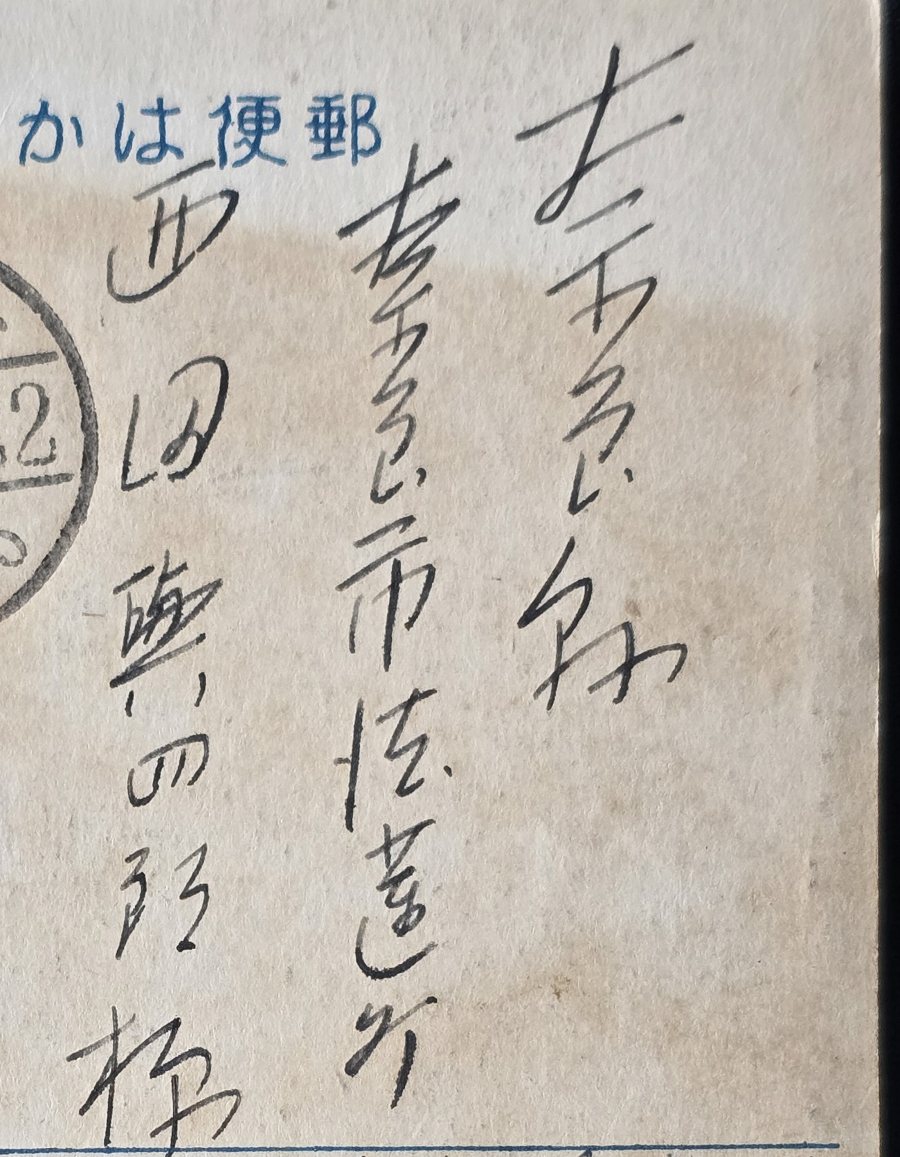
- Addressed to西田與四郎 (Nishida Yoshirō), 法蓮町, Nara — professor of geography at Nara Women's Higher Normal School
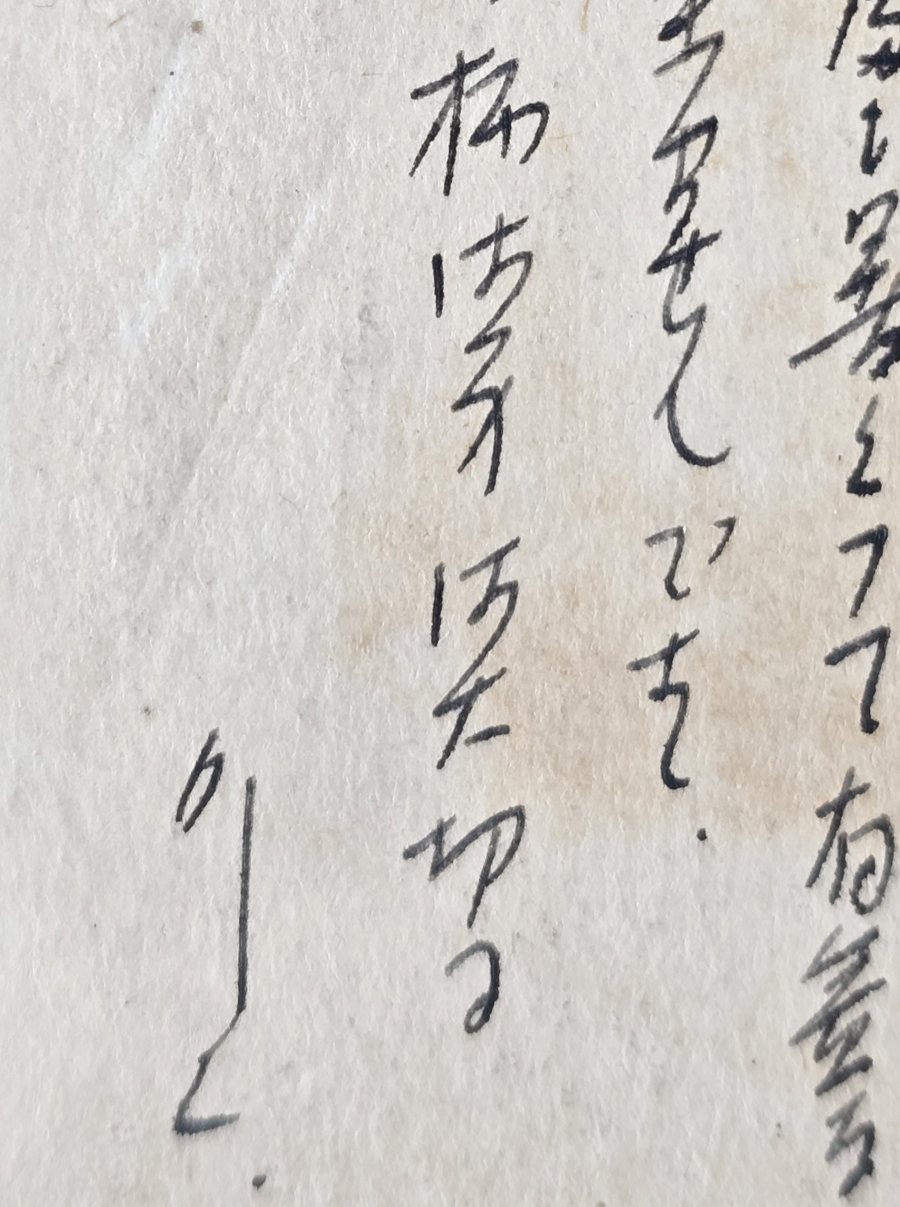
- SenderA woman travelling with her mother; signature ends in 「子」, surname possibly 秋野 tentative
- PictureGovernment-General Building, Seoul — completed December 1925, inaugurated 1 October 1926, demolished 1995–96
- StampJapanese 1½ sen, the postcard rate of the time
- ConditionPostally used; corner damage and staining. The postmark is pressed so hard that a circle shows in the sky on the front
-
The date in the postmark
「新義 14. 8. 22」 — the Sinuiju post office, Taishō 14, 22 August: 1925. The building on the front was still months from completion.
-
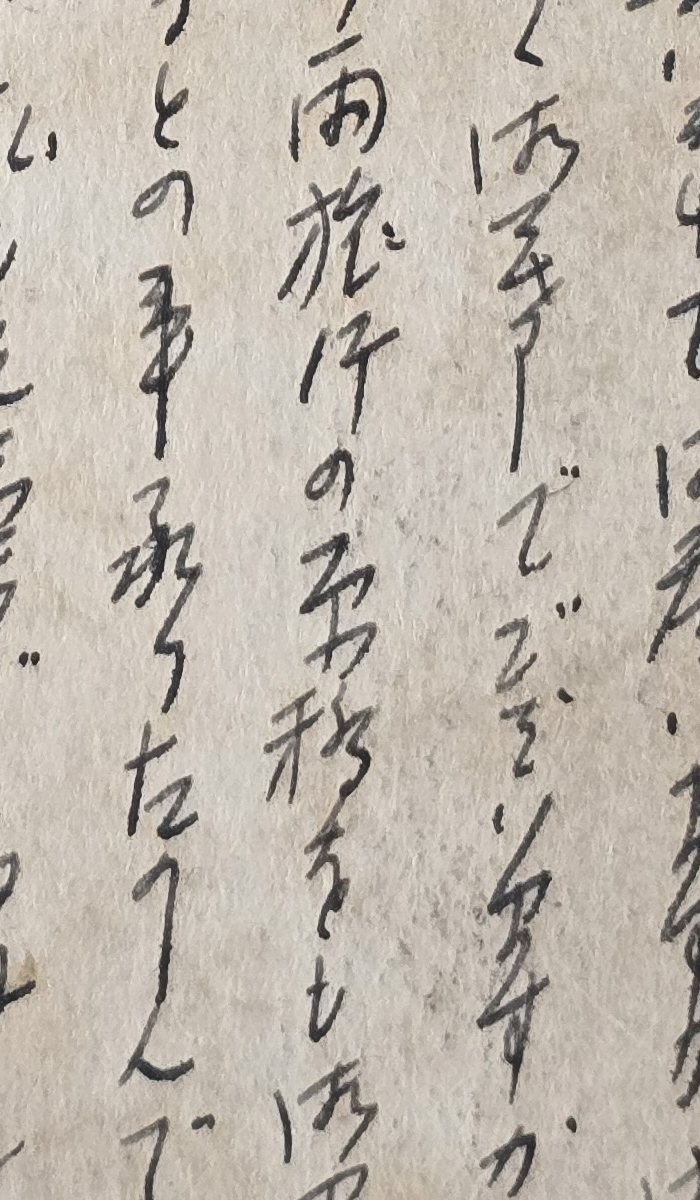
One word changes the story
The cursive pen script was read by eye and cross-checked with the National Diet Library's classical-text OCR. A word first read as 「御様子」 ("how you are") turned out to be 「原稿」 — manuscript. The recipient was writing about his travels.
-
Who was Nishida Yoshirō?
The 1928 Jinji Kōshinroku (Who's Who) lists 西田與四郞, born 1884, professor of geography at Nara Women's Higher Normal School, living at 奈良市法蓮町 — the same address as on the card. He wrote many geography textbooks for girls' schools.
- 1其後は御無沙汰いたし[ ]、毎日
- 2お暑い事で御座いますが、御機
- 3嫌よく御過し(?)でございますか。先
- 4達ての両旅行の原稿をも御書き
- 5下さるとの事承り、たのしんで居
- 6ります。私も元気で、叔母(?)のすゝめ
- 7により母と満鮮(?) [ ]十一日(?)
- 8京城へ参り、只今安東まで来
- 9ました。何處も暑くて[ ][ ][ ]
- 10[ ]様方も[ ][ ][ ]
- 11お暑さの折柄 御身お大切に
- 12遊ばして(?) かしく
(?) tentative · [ ] not yet read
I have not written for a long time. It is hot every day — I hope you are keeping well. I was glad to hear you will also write up your two recent journeys, and I am looking forward to it. I am well too. At (my aunt's?) suggestion I came with my mother (on a tour of Korea and Manchuria?); on the 11th(?) I went to Seoul, and now I have come as far as Andong. It is hot everywhere… In this heat, please take good care of yourself. — kashiku
그동안 소식 못 드렸습니다. 날마다 더운데 잘 지내시는지요. 지난번 두 여행의 원고도 써 주신다니 즐겁게 기다리고 있습니다. 저도 잘 지냅니다. (숙모의?) 권유로 어머니와 (조선·만주 여행을 떠나) 11일(?) 경성에 들렀다가 지금 안동까지 왔습니다. 어디나 덥네요… 더운 때이니 부디 몸조심하십시오. — かしく(여성의 편지 맺음말)
- 1914Nishida Yoshirō becomes professor at Nara Women's Higher Normal School
- 1916Construction of the Government-General Building begins in front of Gyeongbokgung Palace
- Aug 1925This card is mailed from Sinuiju
- Dec 1925Building completed; offices move in January 1926
- 1926Inauguration, 1 October
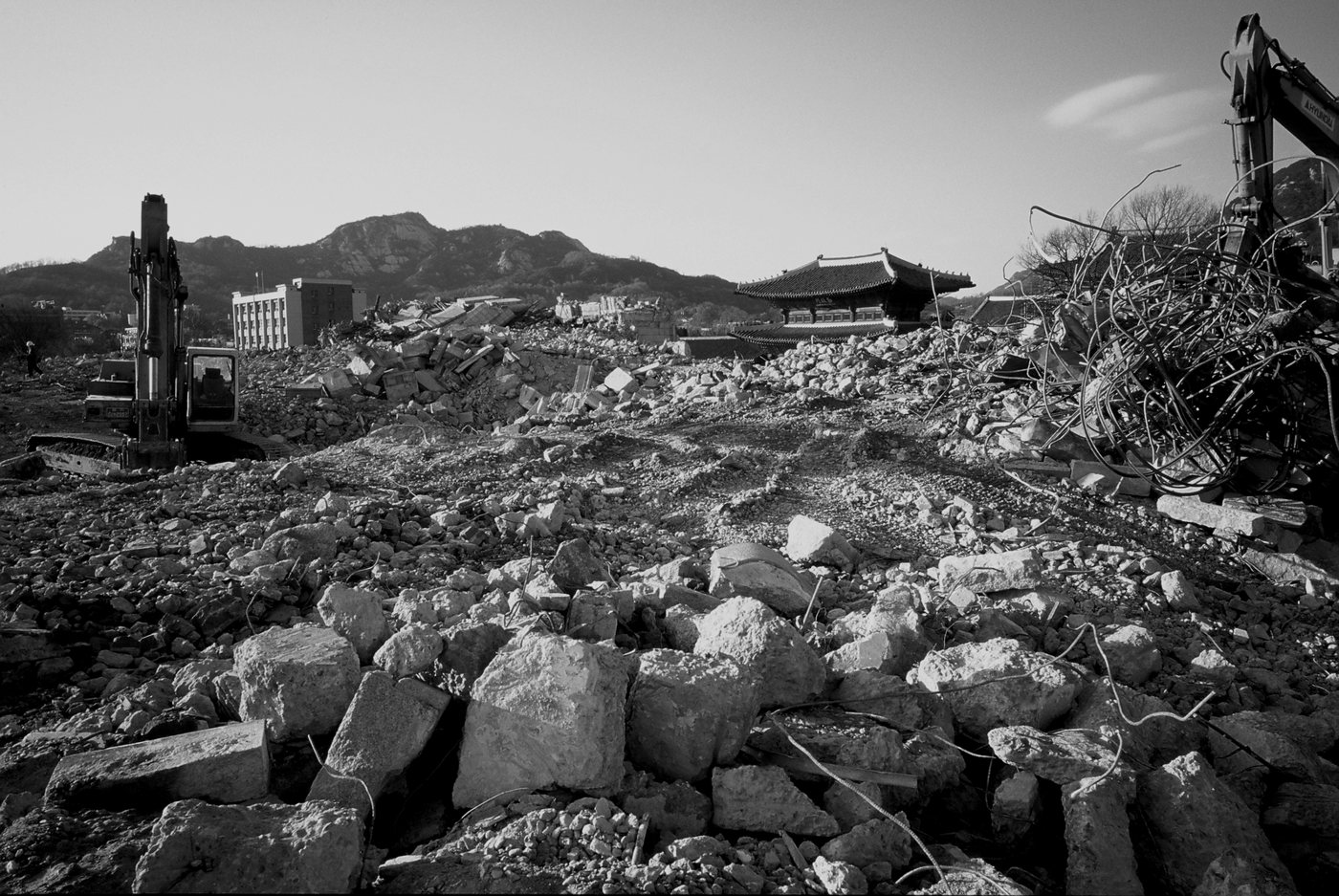
- 1995Demolition begins on 15 August with the removal of the dome spire
- 1996Above-ground demolition completed, 13 November
Lines 7, 9 and 10 are only partly read, and the sender's full name is uncertain. Was she one of Professor Nishida's students? Letters addressed to him have surfaced in the Japanese book trade. If you hold one, or can read these lines, please write.
7·9·10줄 일부와 발신인 이름은 아직 확실하지 않습니다. 그녀는 니시다 교수의 제자였을까요? 니시다 앞으로 온 편지들이 일본 고서 시장에 나와 있습니다. 관련 자료를 갖고 계시거나 판독을 도와주실 수 있다면 연락 주세요.
A timetable home from the Diamond Mountains
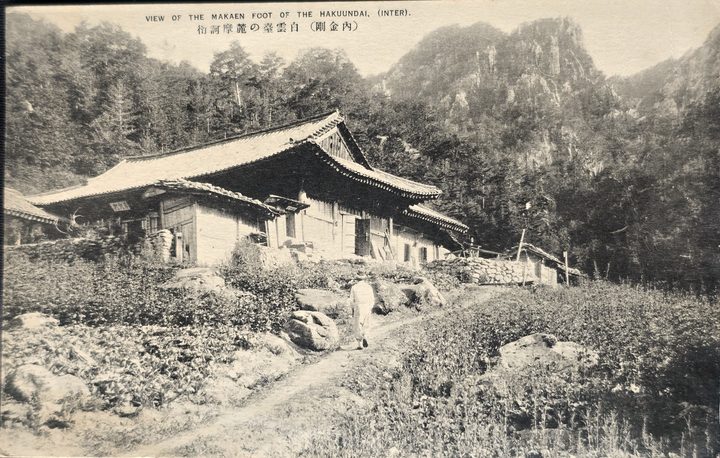
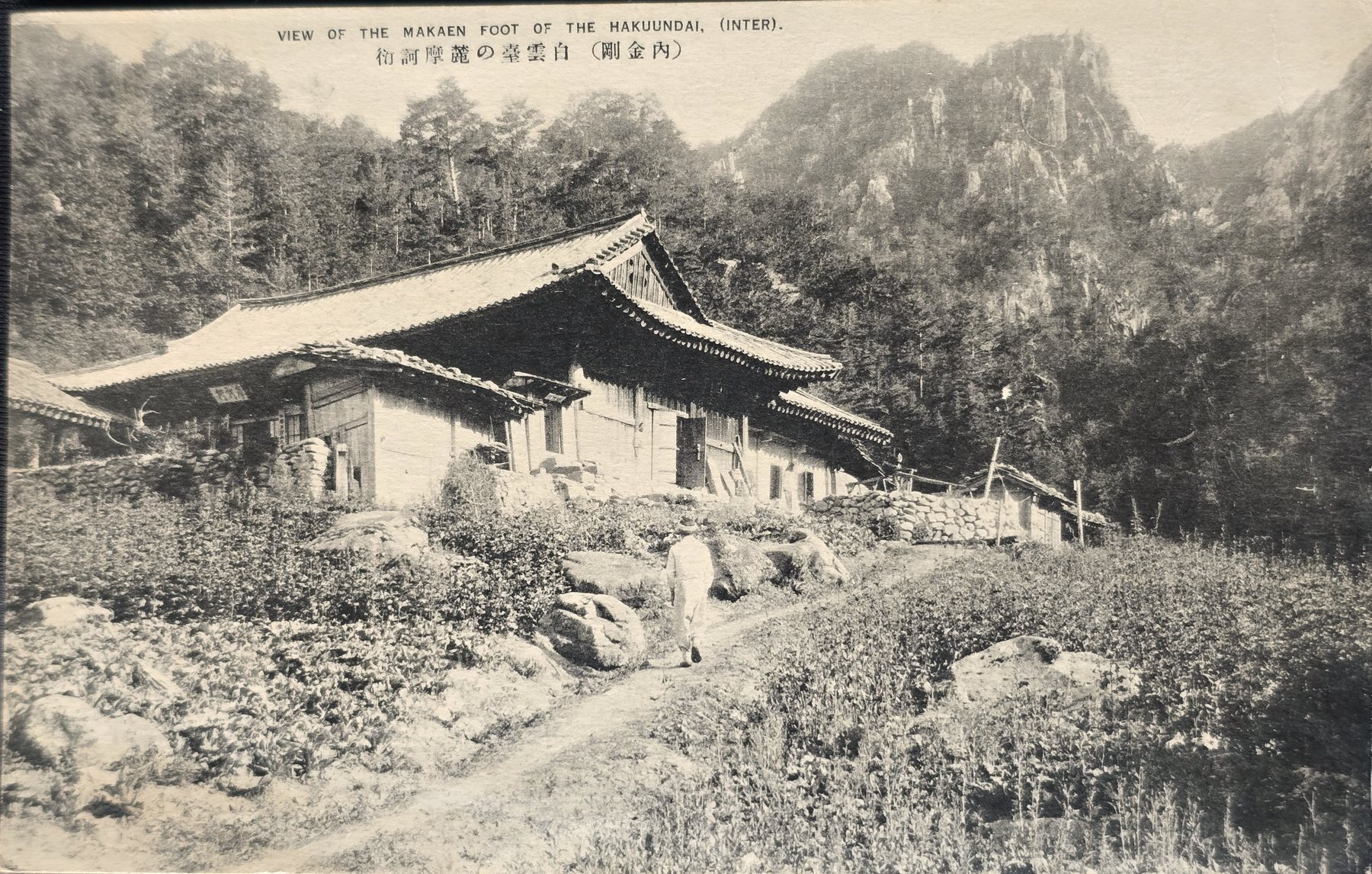
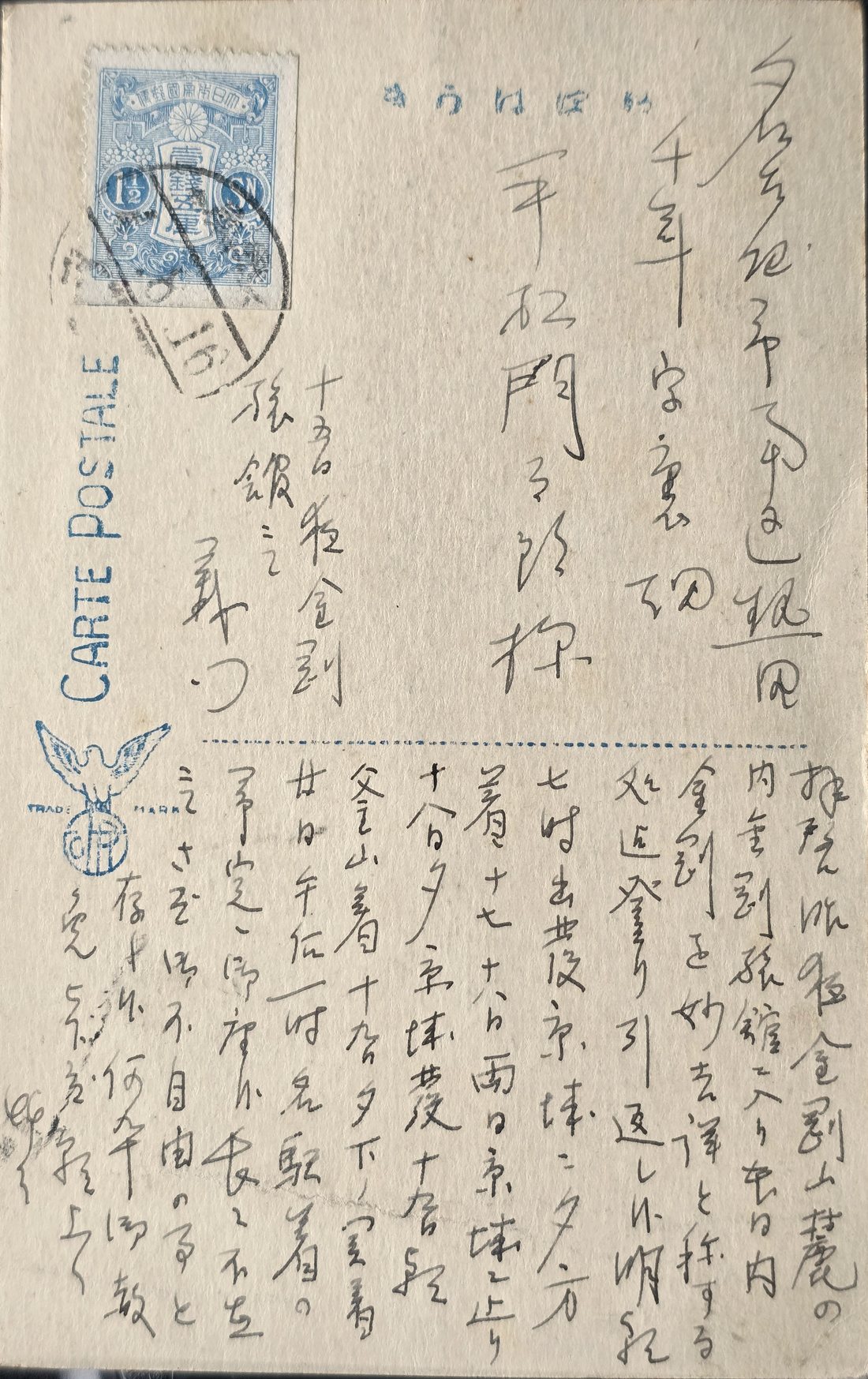
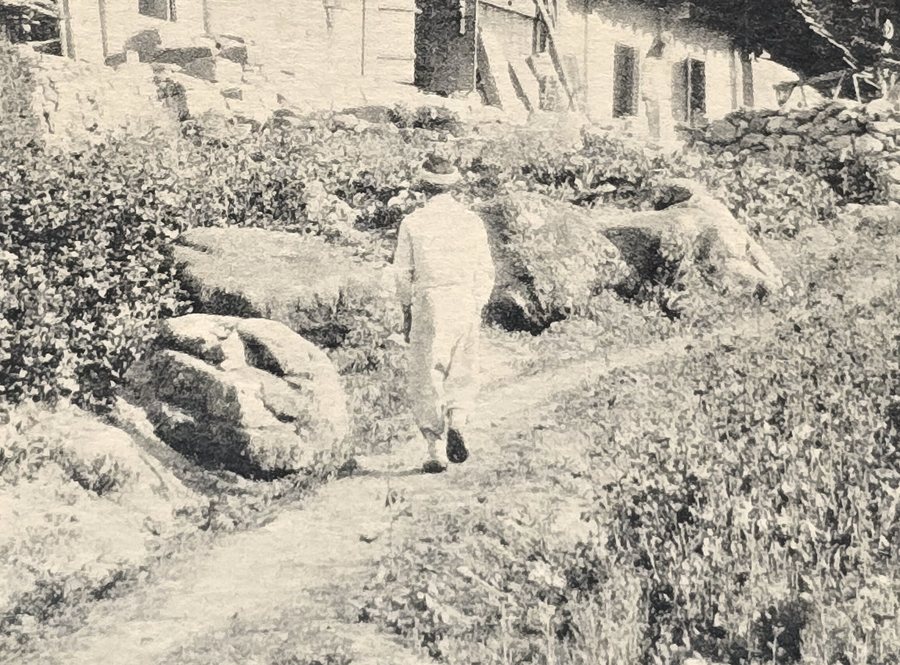
The front shows Mahayeon, a hermitage high in the Inner Kumgang valleys of Korea's Diamond Mountains, with a man in white walking up the path. On the back, a traveler from Nagoya wrote on the night of the 15th from an inn at the foot of the mountains: today I climbed to Myogilsang and came back. The rest of the card is a timetable home — Seoul, Busan, the ferry to Shimonoseki — ending with the hour of arrival at Nagoya Station. Nearly a century later, the card was found in a second-hand bookshop in the same city.
앞면은 금강산 내금강 깊은 골짜기의 암자 마하연이고, 길에는 흰옷 입은 남자가 걸어 올라가고 있습니다. 뒷면에는 나고야에서 온 여행자가 15일 밤 금강산 기슭 여관에서 "오늘 묘길상까지 올랐다가 돌아왔다"고 쓰고, 이어서 경성·부산·시모노세키를 거쳐 나고야역에 도착하는 시각까지 귀향 일정을 적었습니다. 거의 백 년 뒤, 이 엽서는 바로 그 도시의 고서점에서 나왔습니다.
- Mailed16 August, year not readable — the postmark's year falls under the stamp's design. Written on the night of the 15th, 「十五日夜 金剛旅館にて」
- DateBefore 1937 — the address is "Minami Ward, Chitose"; Chitose was moved into the new Atsuta Ward in October 1937. Probably after July 1931, when the electric railway reached Inner Kumgang tentative
- Addressed toThe Hiramatsu household, Chitose, Minami Ward, Nagoya — 平松門(?)三郎 様 tentative
- SenderSigns with two characters, 「?つ」 — the first is not yet read. A member of the household, coming home
- PictureMahayeon hermitage below Baegundae peak, Inner Kumgang. Destroyed in the Korean War; only the site remains, now in North Korea
- Card"TAISHO" trademark card, made in Wakayama; Japanese 1½ sen stamp
- ConditionPostally used; a fold crease across the card
- 15th, nightInn at Inner Kumgang内金剛旅館
- 16th, 7 a.m.Leave the mountains明朝七時出発
- 16th, eveningSeoul京城に夕方着
- 17th – 18thTwo days in Seoul両日京城に止り
- 19thBusan釜山着
- 19th, eveningShimonoseki下ノ関着
- 20th, 1 p.m.Nagoya Station名駅着
Every stop and time above is written on the card. The route between them — probably the Kumgang Electric Railway to the Gyeongwon Line, and the overnight ferry from Busan — is our reconstruction.
-
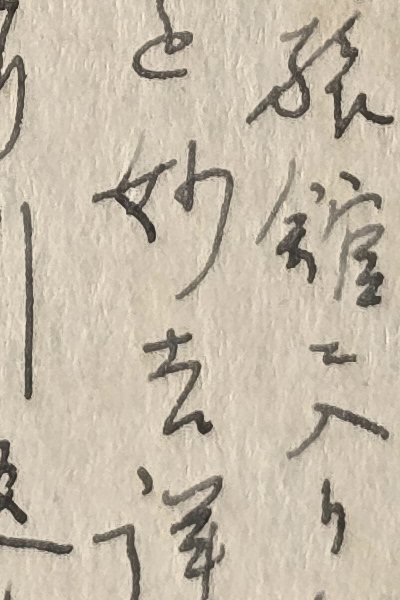
Myogilsang, a Buddha in the cliff
「本日内金剛を妙吉祥と称する処迄登り引返し」 — "today I climbed Inner Kumgang as far as the place called Myogilsang, and came back." Myogilsang is a Goryeo-period Buddha carved into a cliff above Mahayeon, about 15 metres high.
-
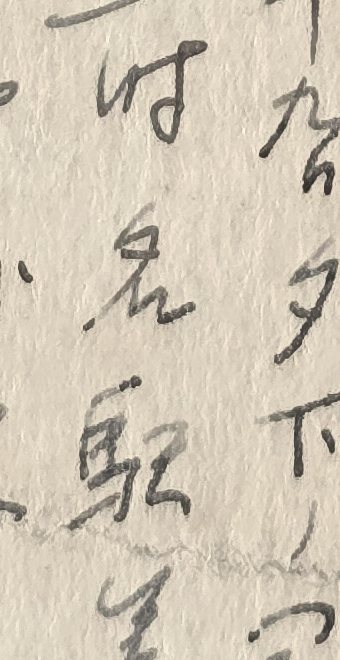
A Nagoya word
The writer did not write 名古屋駅 (Nagoya Station) but 「名駅」 — Meieki, the short form people in Nagoya use. A small sign that the writer was a local, heading home. The first reading by eye and the National Diet Library's OCR agree on this word.
-
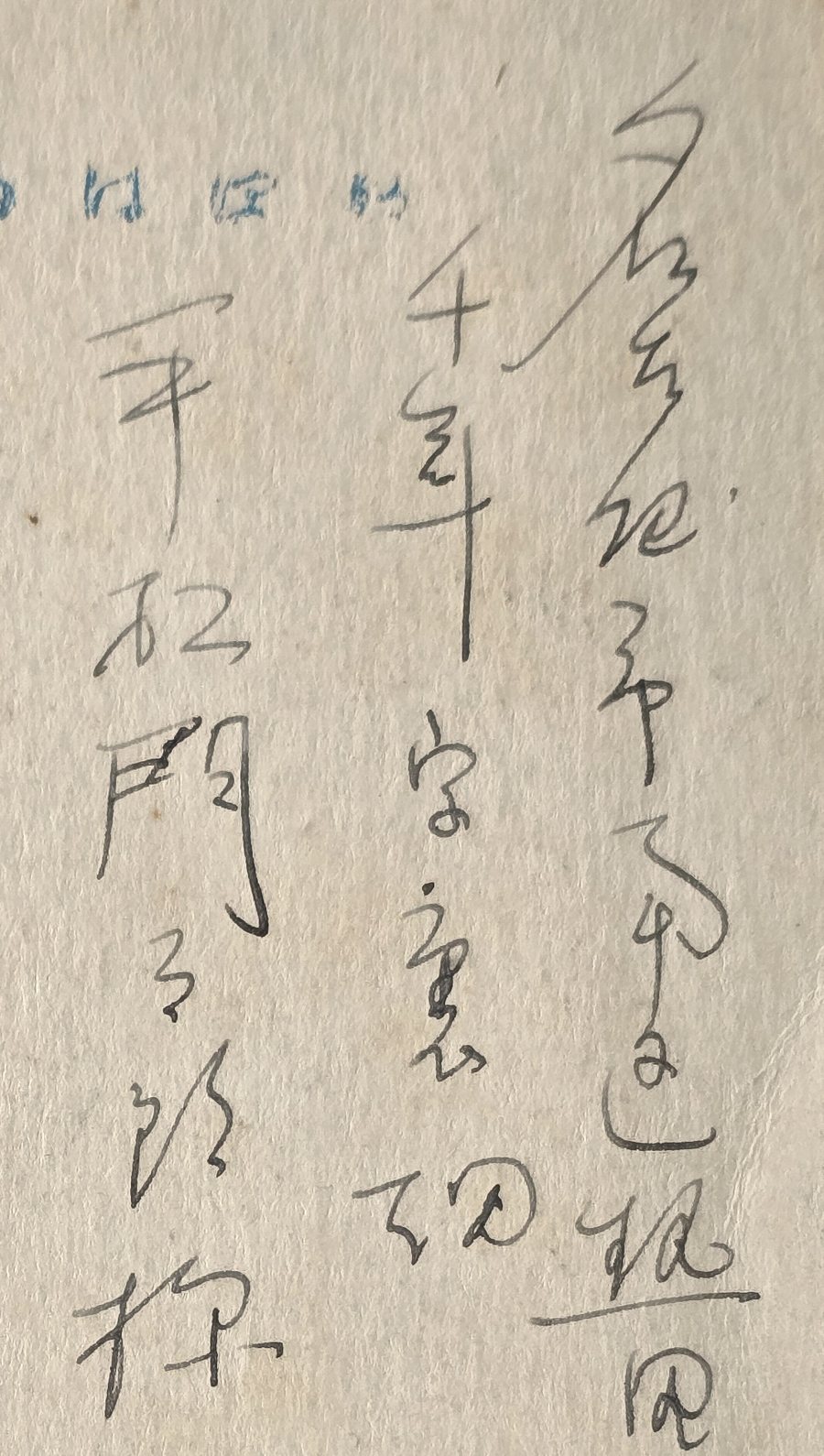
Dating a card with no year
The postmark's year is hidden by the stamp. But the address reads 「名古屋市南区 千年」. In October 1937 Chitose became part of the new Atsuta Ward, so the card was mailed before then. A same-day trip from Inner Kumgang to Seoul fits the electric railway that reached Inner Kumgang in July 1931.
- 1拝啓 昨夜 金剛山麓の
- 2内金剛旅館に入り 本日 内
- 3金剛を 妙吉祥と称する
- 4処迄 登り 引返し(候?) 明朝
- 5七時出発 京城に夕方
- 6着 十七十八日 両日 京城に止り
- 7十八日夕 京城発 十九日(朝?)
- 8釜山着 十九日夕 下ノ関着
- 9廿日 午后一時 名駅着の
- 10予定に御座候 長々不在
- 11にて さぞ御不自由の事と
- 12存じ候 何卒 御放(?)
- 13念(?)被下度 願上候(?)
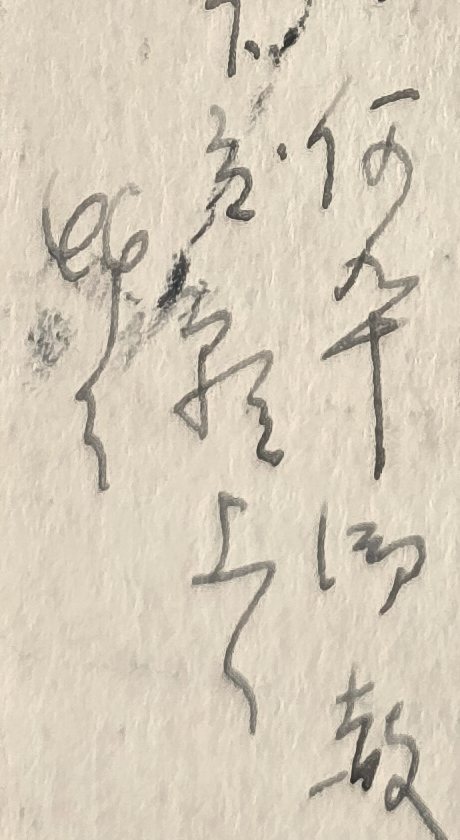
- 14[ ] — closing word, not yet read
(?) tentative · [ ] not yet read · read by eye and cross-checked with NDL Koten OCR-Lite
Dear —, Last night I reached the Inner Kumgang Inn at the foot of the Diamond Mountains. Today I climbed Inner Kumgang as far as the place called Myogilsang, and came back. Tomorrow I leave at seven in the morning and arrive in Seoul in the evening. I will stay in Seoul on the 17th and 18th, leave Seoul on the evening of the 18th, reach Busan on the 19th, and Shimonoseki on the evening of the 19th. I expect to arrive at Nagoya Station at one in the afternoon on the 20th. I have been away so long — it must have been very inconvenient for you. Please do not worry about me.
어젯밤 금강산 기슭의 내금강 여관에 들었습니다. 오늘은 내금강의 '묘길상'이라는 곳까지 올라갔다가 돌아왔습니다. 내일 아침 7시에 떠나 저녁에 경성에 도착하고, 17·18일 이틀은 경성에 머문 뒤 18일 저녁 경성을 떠나 19일 부산, 19일 저녁 시모노세키에 닿습니다. 20일 오후 1시 나고야역(名駅)에 도착할 예정입니다. 오래 집을 비워 얼마나 불편하시겠습니까. 부디 걱정하지 마십시오.
Who was coming home?
The card is signed with just two characters. The second is つ. We cannot read the first. Here is what the card itself tells us so far.
- StyleOpens with 拝啓 and is written in formal 候 style — more often seen in men's letters of the time.
- NameGiven names ending in つ (Mitsu, Natsu…) were usually women's names.
- Home"It must have been very inconvenient for you while I was away" fits whoever ran the household.
- EndingThe last flowing word, bottom left, may be かしく — a woman's closing — or something else.
- ContextWomen rarely travelled alone then; the woman in Exhibit 02 travelled with her mother. This card does not say whether the writer was alone.
If you can read the signature or the last word, please write.
서명은 두 글자이고 둘째 글자는 つ입니다. 첫 글자와 왼쪽 끝 맺음말을 읽을 수 있는 분은 알려 주세요.
sepiacorea@byeoldari.net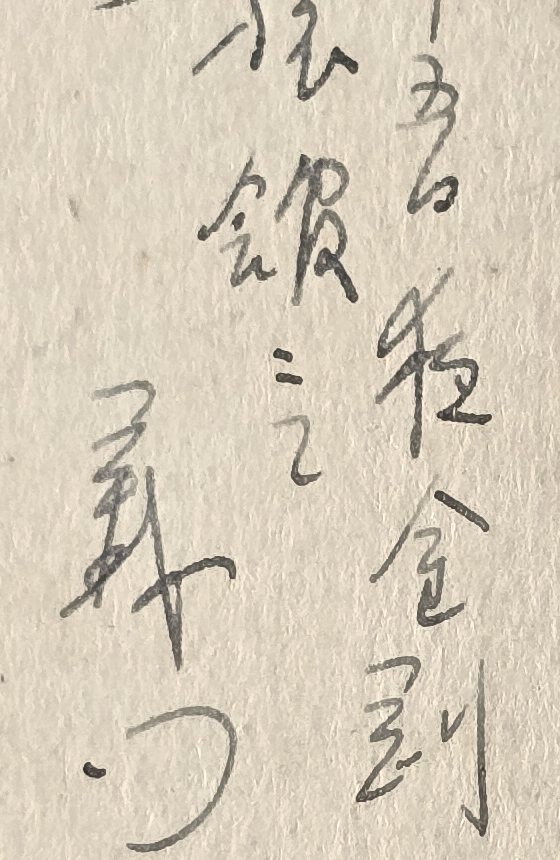
- SillaMahayeon founded, by tradition, by the monk Uisang
- 1788Kim Hong-do paints Mahayeon for his album of the Diamond Mountains
- 1931The Kumgang Electric Railway reaches Inner Kumgang (1 July)
- < 1937This card is mailed home to Nagoya
- 1937Chitose becomes part of the new Atsuta Ward (1 October)
- 1950–53Mahayeon destroyed in the Korean War
- 2007Inner Kumgang opened to South Korean tourists (June)
- 2008Mount Kumgang tours suspended (July)
Another card reached the same family in Chitose, Nagoya, from a different writer: in September 1934, at the Manchurian border, a note about pistol checks, customs and passport inspections.
같은 나고야 千年의 平松 씨 댁에는 다른 사람이 보낸 엽서가 한 장 더 왔습니다. 1934년 9월 만주 국경에서 권총·세관·여권 검사를 적은 엽서입니다.
→ Exhibit 04 · Guns at the border, blossoms in SeoulGuns at the border, blossoms in Seoul
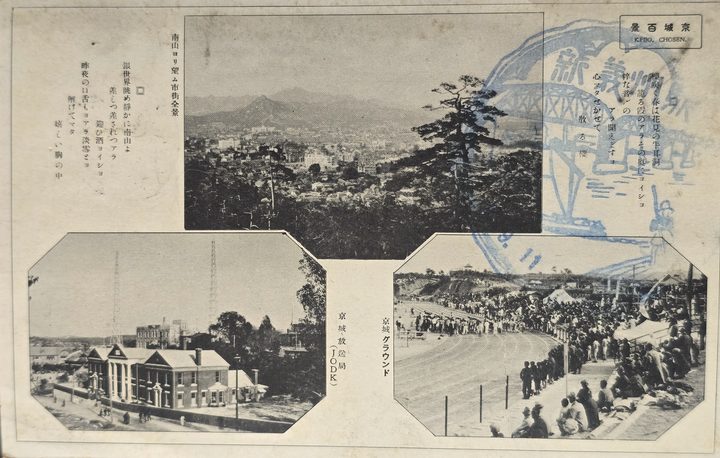
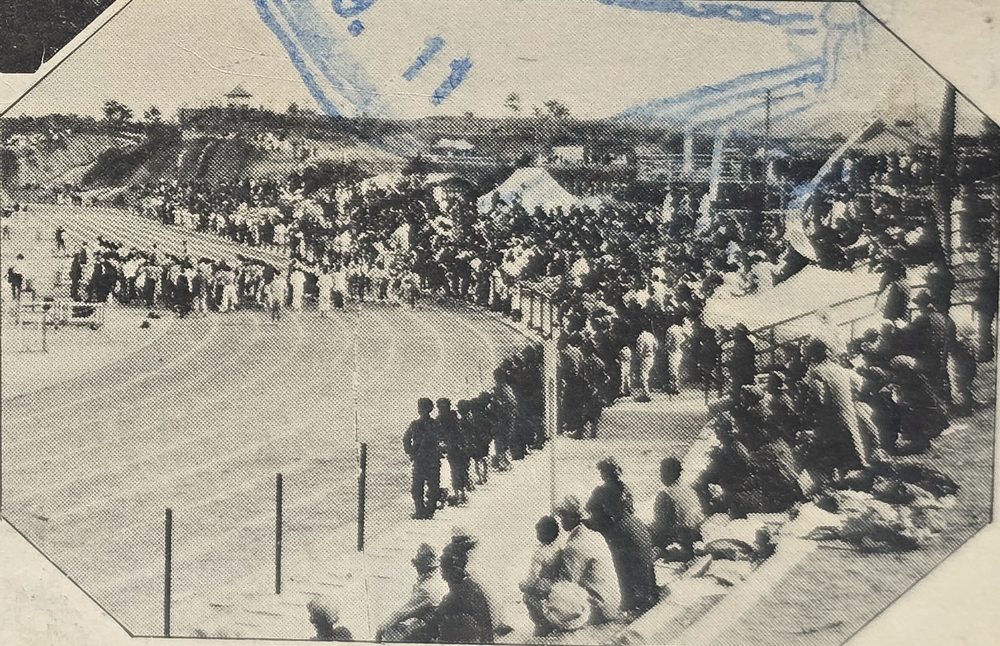
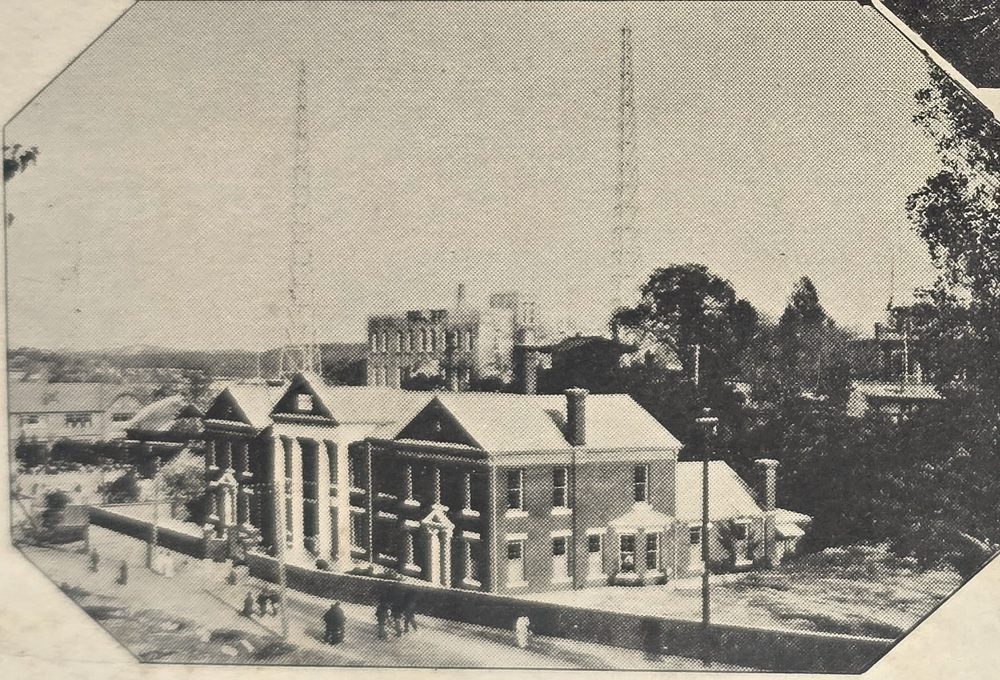
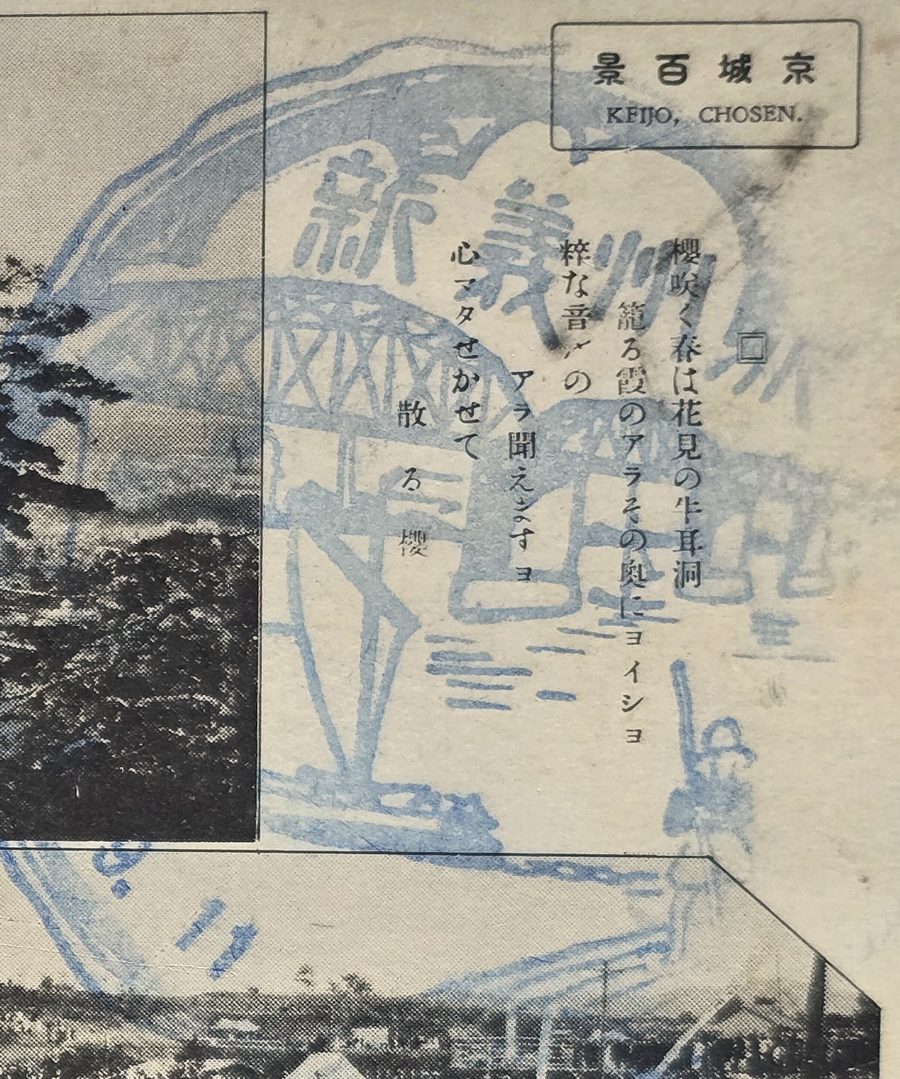
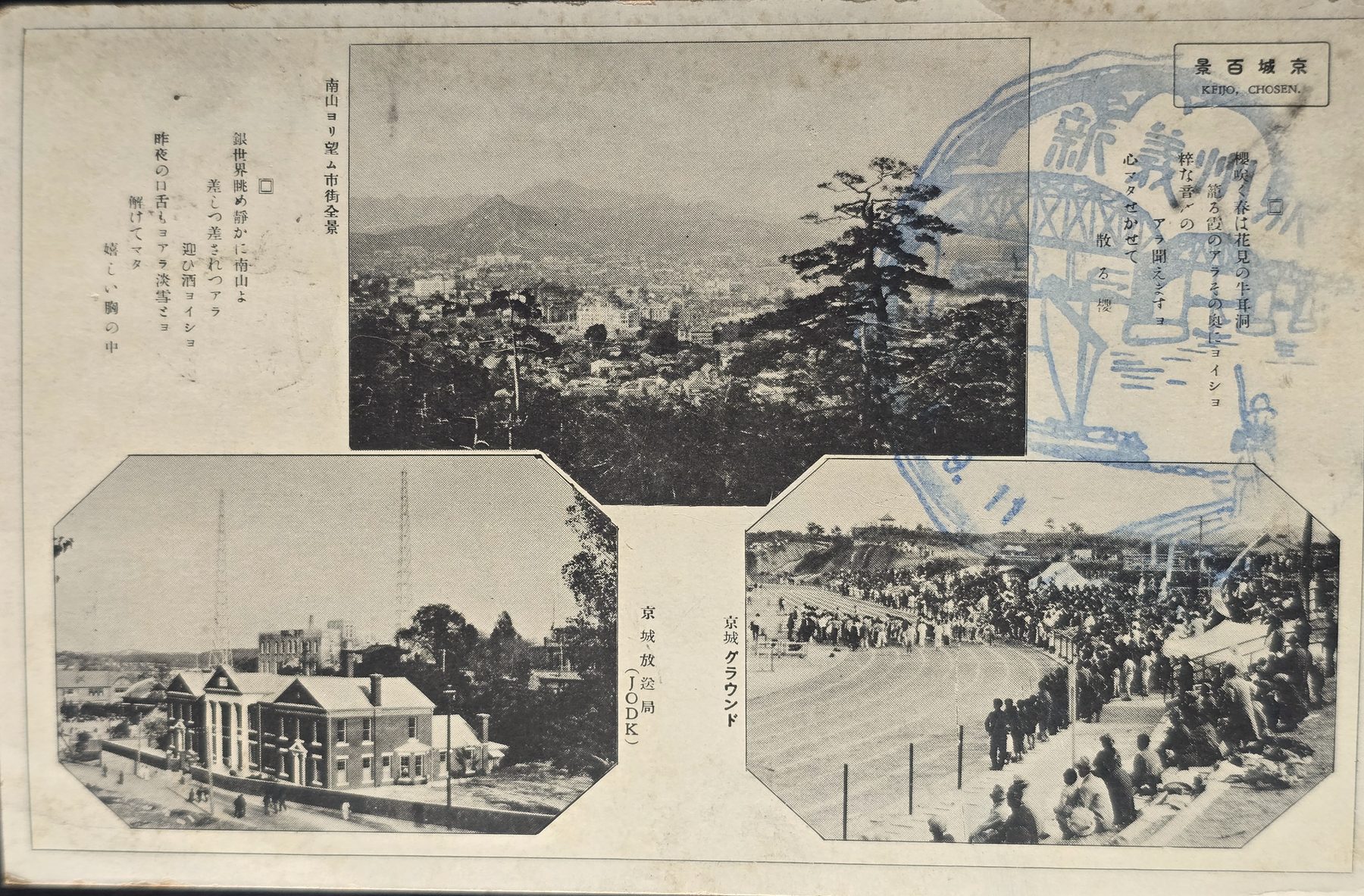
The front shows three views of Seoul, then called Keijo: the city seen from Namsan, the radio station JODK, and a crowded stadium, with a printed song about cherry blossoms at Uidong. Across the corner, someone pressed a blue souvenir stamp from Sinuiju, the Korean town on the Manchurian border — a picture of the Yalu River Bridge, dated "9.11". On the back, a Japanese traveler wrote to the Hiramatsu household in Nagoya: the border feeling, pistol checks, customs and passport inspections.
앞면은 경성의 세 장면입니다. 남산에서 본 시가, 경성방송국 JODK, 관중이 가득한 경성운동장, 그리고 우이동 벚꽃놀이를 노래한 가사가 인쇄되어 있습니다. 그 위 모서리에 만주 국경의 도시 신의주의 파란 기념 스탬프가 찍혀 있습니다. 압록강 철교 그림과 "9.11". 뒷면에는 일본인 여행자가 나고야의 平松 씨 댁에 국경 분위기, 권총 검사, 세관·여권 검사를 적어 보냈습니다.
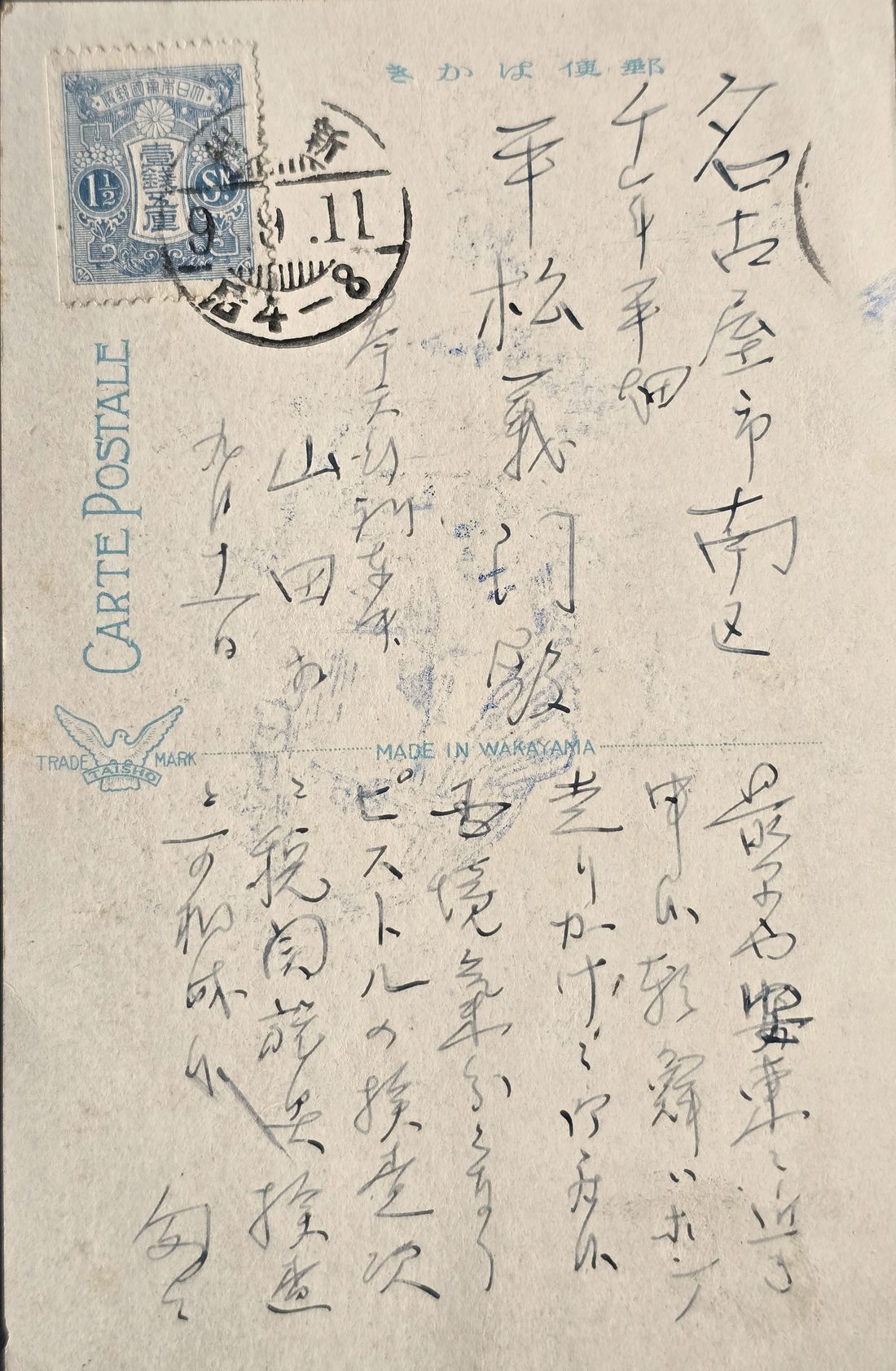
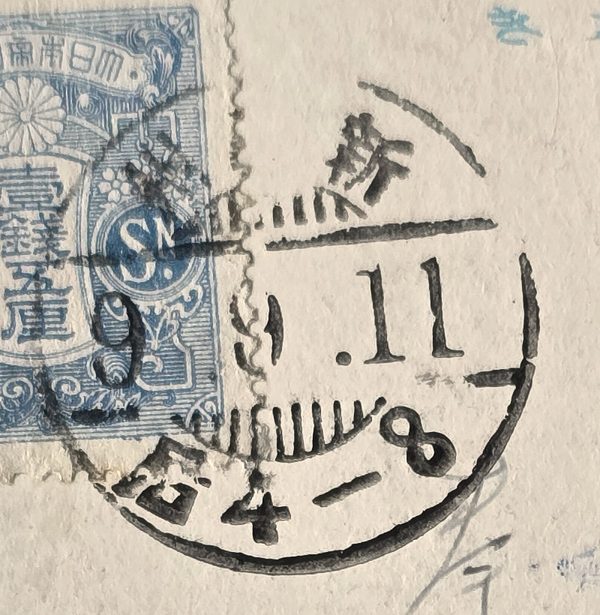
- MailedSinuiju, 11 September 1934 — postmark 「新(義州) 9.9.11 後4-8」 (Showa 9). Written on the 10th, 「九月十日」
- From「奉天(?) … 山田方」 — "care of Yamada", perhaps in Mukden (Shenyang). If so, the traveler was coming south from Manchuria into Korea tentative
- Addressed toThe Hiramatsu household, Chitose Hirahata, Minami Ward, Nagoya — 平松義(?)○ 殿 tentative
- Picture京城百景 — Seoul from Namsan, Keijo Broadcasting Station (JODK), Keijo Stadium, and a printed song of the seasons
- StampBlue souvenir stamp of Sinuiju with the Yalu River Bridge, pressed over the front
- Card"TAISHO" trademark card, made in Wakayama; Japanese 1½ sen stamp — the same kind of card as Exhibit 03
-
The stadium → DDP
Keijo Stadium opened on 15 October 1925, Korea's first modern sports ground. It became Seoul Stadium, then Dongdaemun Stadium, and was demolished in 2008. Dongdaemun Design Plaza and the Dongdaemun History & Culture Park now stand on the site.
-
The radio station → KBS
JODK, the Keijo Broadcasting Station in Jeong-dong, went on air on 16 February 1927. It broadcast in Japanese and Korean — at first roughly seven parts to three. After liberation it grew into today's KBS.
-
The bridge on the stamp
In 1934 there was only one bridge across the Yalu at Sinuiju, so the stamp shows the bridge Japan opened in October 1911, linking Korea's railways to the continent. Its later story is in the timeline below.
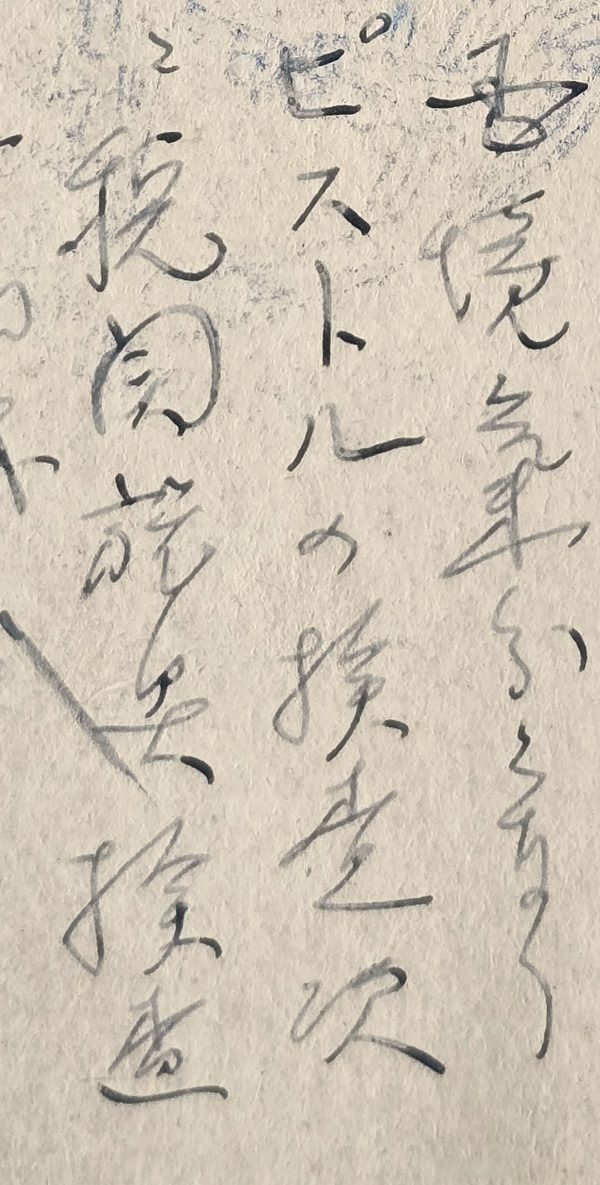
- 1最早(や) 安東に近き
- 2中(?) [ ] 新(義?) [ ] [ ] [ ]
- 3走りかけて [ ] [ ]
- 4国(?)境(?) 気分となり(?)
- 5ピストルの検査(?) [ ]
- 6と 税関 旅券(?) 検査
- 7と 一寸 気味わる(?)く
- 8匆々(?)
(?) tentative · [ ] not yet read · read by eye and cross-checked with NDL Koten OCR-Lite
Already close to Andong. (…) It has turned into a border mood — a pistol check (?), customs and a passport (?) inspection — and it was a little eerie. In haste.
벌써 안동 가까이 왔습니다. (…) 국경 분위기가 되어, 권총 검사(?)와 세관·여권(?) 검사로 좀 으스스했습니다. 총총.
1934 was two years after Japan set up Manchukuo. Sinuiju (Korea) and Andong (now Dandong, China) faced each other across the Yalu; the bridge between them was the border crossing.
Where was this written?
The video shows only the words we are fairly sure of. Much of this card is still unread.
- FromThe sender line may begin 奉天 (Mukden). The town or street name after it is not yet read.
- Lines 2–3Something about 新(義州?) and 走りかけて — "starting to run" — perhaps the train.
- ToThe second character of the recipient's name: 周? 閏? Something else?
- WriterA different hand from Exhibit 03, to a different person in the same household.
If you can read any of these, please write.
발신지(奉天?) 다음 지명, 2·3번째 줄, 수신인 이름 둘째 글자를 읽을 수 있는 분은 알려 주세요.
sepiacorea@byeoldari.net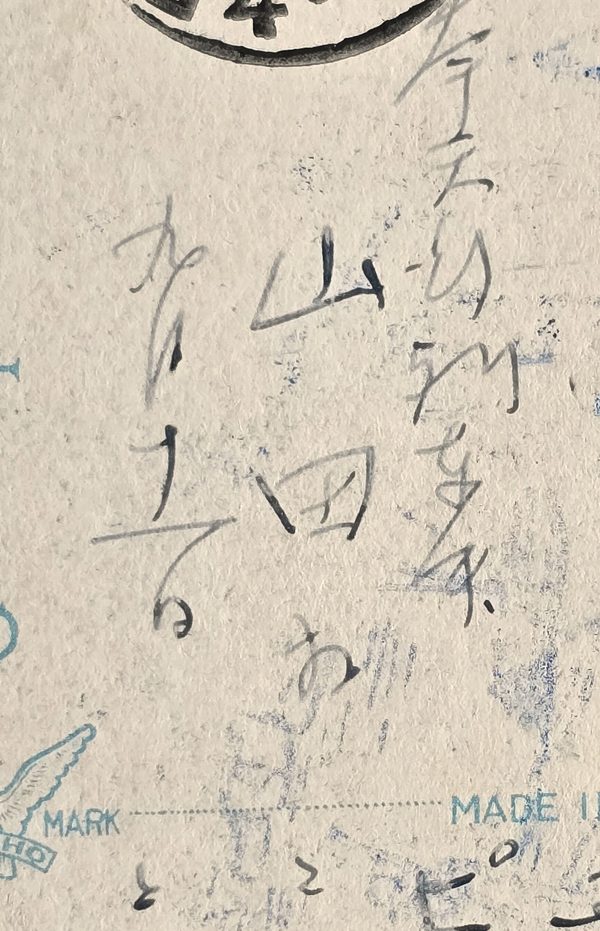
- 1911Japan opens the Yalu River railway bridge between Sinuiju and Andong (October)
- 1934This card is stamped and mailed at Sinuiju (11 September)
- 1943A second bridge opens beside it — today's Sino-Korean Friendship Bridge, still the main crossing
- 1950–51US bombing destroys the Korean half of the 1911 bridge (Nov 1950 – Feb 1951)
- todayNever rebuilt: the Chinese half still ends in the middle of the river — the "Broken Bridge" of Dandong
- 2014The New Yalu River Bridge is completed downstream
- 2026The New Yalu River Bridge officially opens (15 October)
The same family in Chitose, Nagoya, received another card from a different writer: a timetable home from the Diamond Mountains, ending "arriving at Nagoya Station on the 20th, 1 p.m." Two cards, two journeys back across a border and a sea.
같은 나고야 千年의 平松 씨 댁에는 다른 사람이 보낸 엽서가 한 장 더 있습니다. 금강산에서 보낸 귀향 일정표입니다.
→ Exhibit 03 · A timetable home from the Diamond MountainsPort Lazarev, inspected
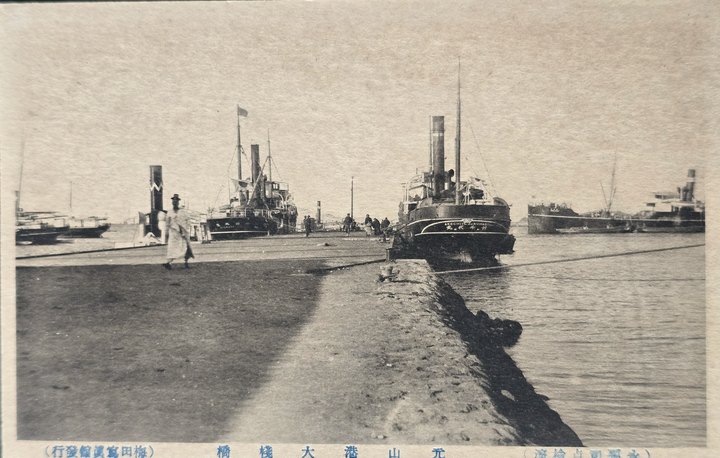
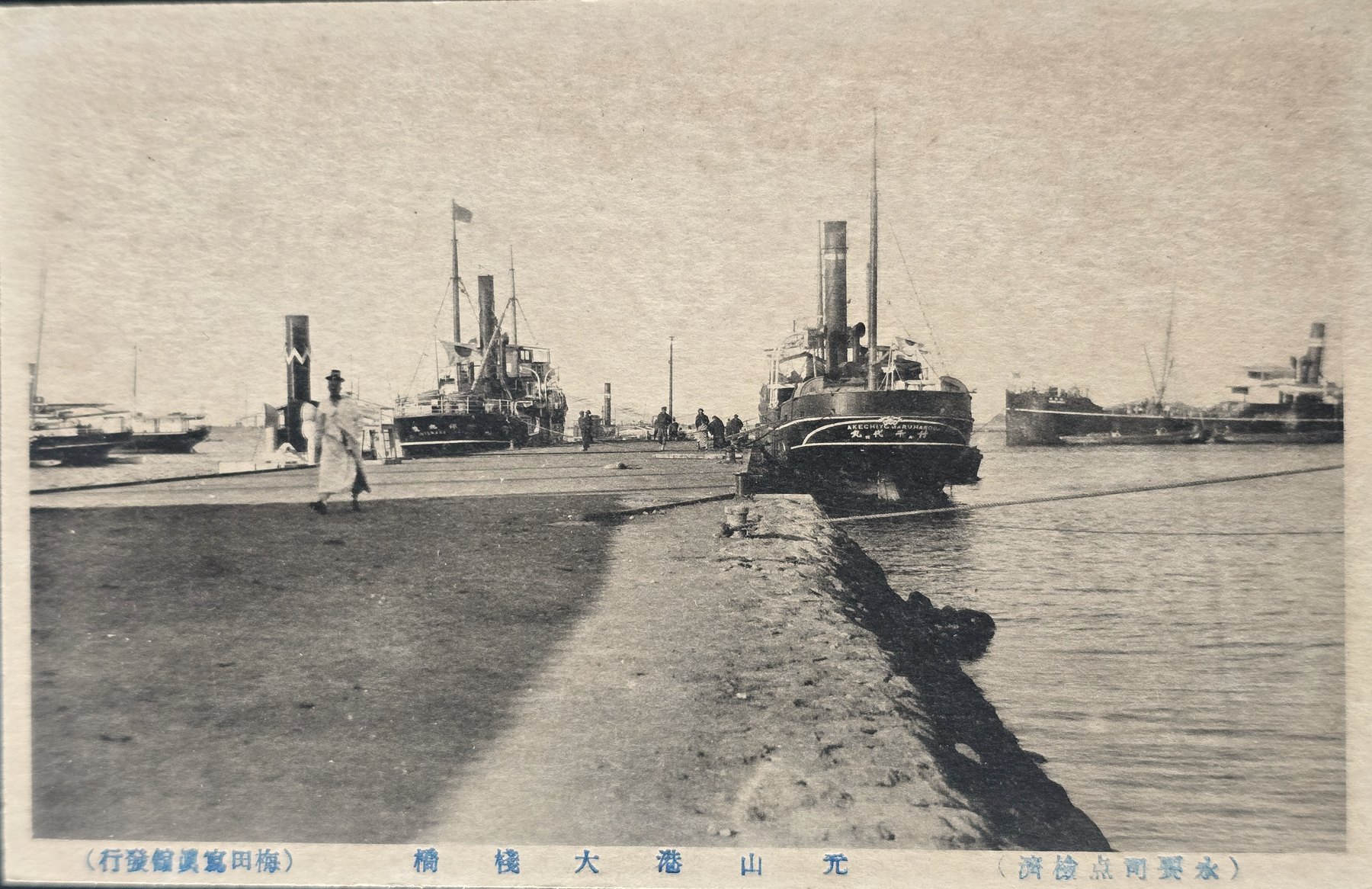
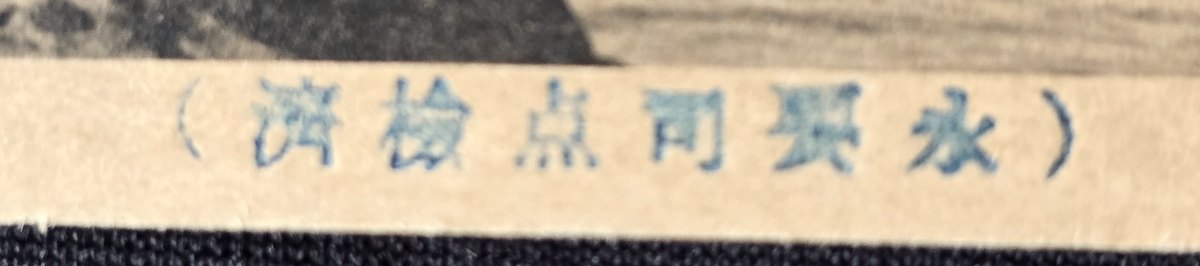
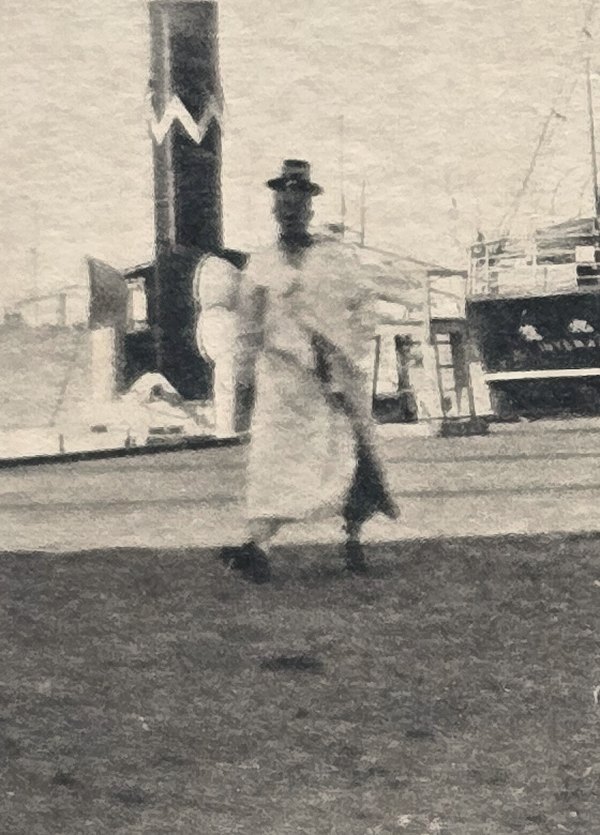
Steamships tied up at the great pier of Wonsan, on Korea's northeast coast. Russia had wanted this bay since its survey of 1854 and called it Port Lazarev; during the Russo-Japanese War, Japan ringed it with gun batteries. So before this picture could be sold, the army had to approve it — the corner reads 「永要司点検済」, "checked by the Eiko (Yonghung) Bay Fortress Command." Nobody wrote on this card, and nobody mailed it. But walking straight toward the camera is a Korean man in a white robe and a gat, the traditional black hat.
조선 동북 해안 원산항 대잔교에 증기선들이 묶여 있습니다. 러시아는 1854년 측량 때부터 이 만을 탐내 '라자레프 항'이라 불렀고, 러일전쟁 중 일본은 만을 포대로 둘렀습니다. 그래서 이 사진은 팔리기 전에 군의 검사를 받아야 했습니다. 귀퉁이의 「永要司点検済」는 '영흥만 요새사령부 점검필'이라는 뜻입니다. 아무도 쓰지 않았고 부치지도 않은 엽서이지만, 카메라를 향해 흰 두루마기에 갓을 쓴 조선 남자가 걸어오고 있습니다.
- Picture元山港大棧橋 — the great pier of Wonsan harbour, with steamships moored alongside
- Publisher梅田寫眞館發行 — Umeda Photo Studio
- Inspection「永要司点検済」, printed on the front — approved by the Yonghung Bay Fortress Command at Wonsan
- ShipOn one stern: AKECHIYO MARU, 明千代丸, and "HAKO…" — perhaps Hakodate, its home port tentative
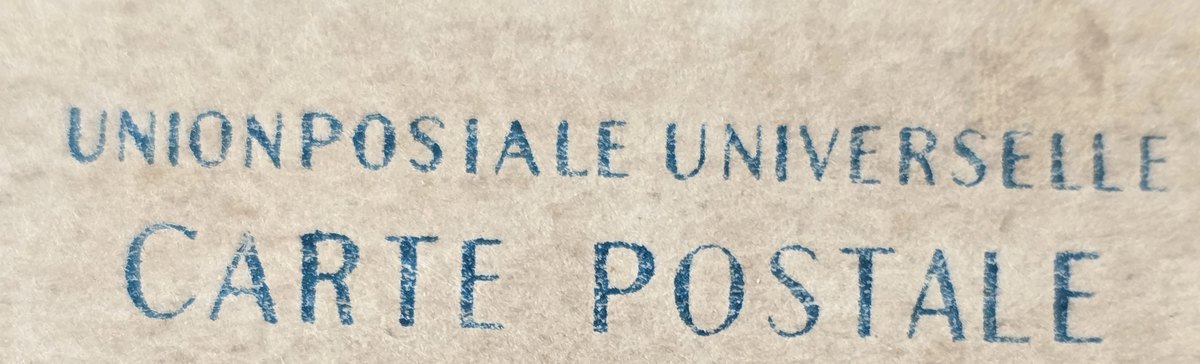
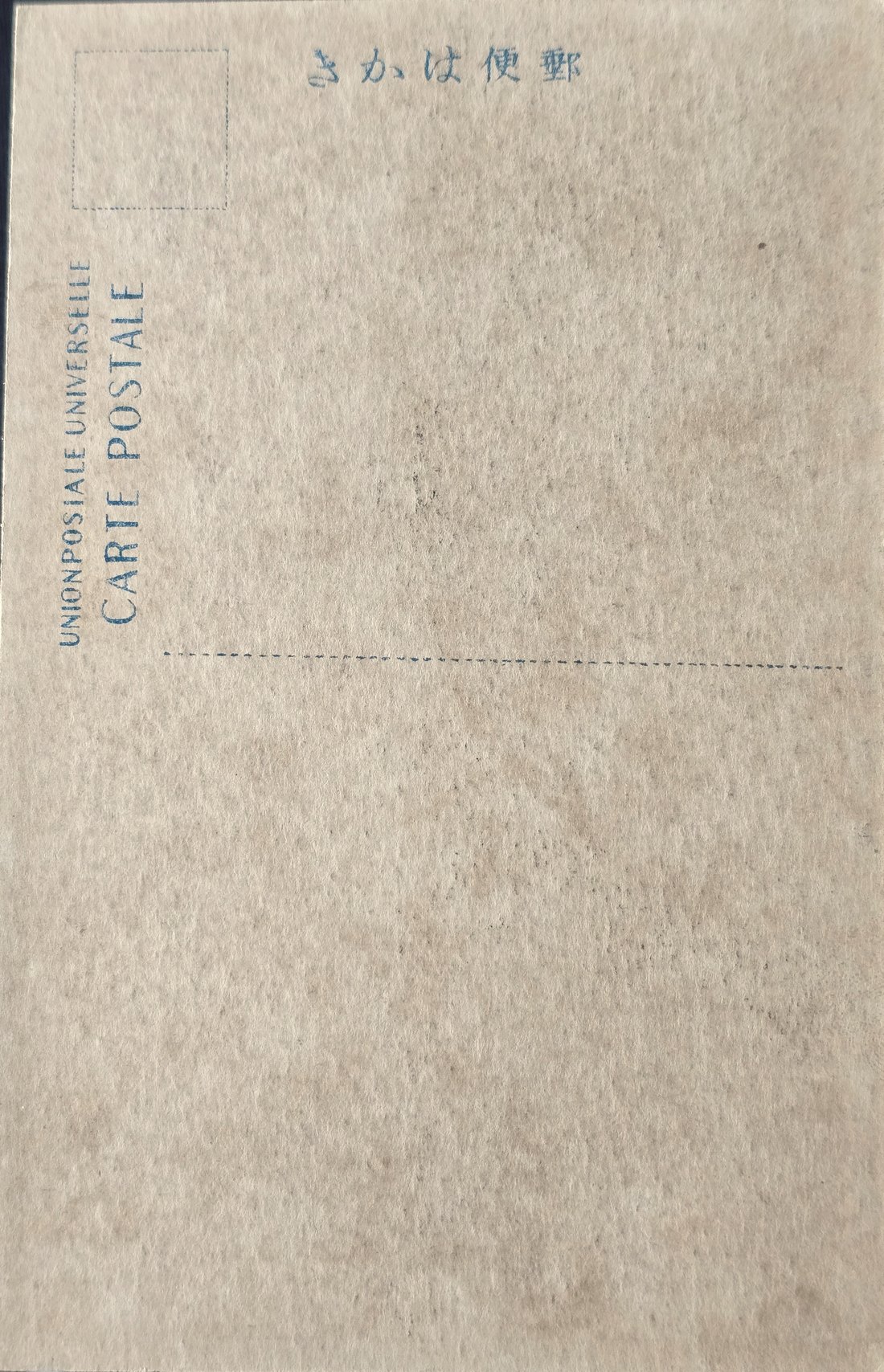
- CardUnused. 「郵便はかき」 on the back, and a misprint: "UNION POSIALE" for "UNION POSTALE"
- DateBefore 1933, from the spelling 「はかき」 and the fortress command (from 1905) estimated
-
Port Lazarev
A Russian survey of 1854 found the bay highly desirable and named it Port Lazarev. In 1880 Wonsan was opened as a trade port, and a Japanese consulate opened the same month.
-
The army's approval
From August 1904, during the war with Russia, Japan built twelve gun batteries around Yonghung Bay. In May 1905 the fortress command was set up at Wonsan. Pictures of the harbour had to pass its inspection — this one carries the mark.
-
Nobody checked the spelling
The army checked the picture. On the back, the printer set "UNION POSIALE" instead of "UNION POSTALE." We do not yet know whether every card in this printing carries the same error.
Do you know this ship?
The stern of the steamship at the pier reads AKECHIYO MARU, with its name in characters, 明千代丸. The letters after MARU begin "HAKO…" — perhaps Hakodate, the port where it was registered.
- NameAKECHIYO MARU · 明千代丸 (read right to left on the stern)
- Port"HAKO…" — Hakodate? Not yet confirmed.
- RouteUnknown. Which line ran this ship to Wonsan, and when?
- MisprintHave you seen another Umeda Photo Studio card with "POSIALE"?
明千代丸의 선주·항로, 같은 발행처 엽서의 POSIALE 오식을 아시는 분은 알려 주세요.
sepiacorea@byeoldari.net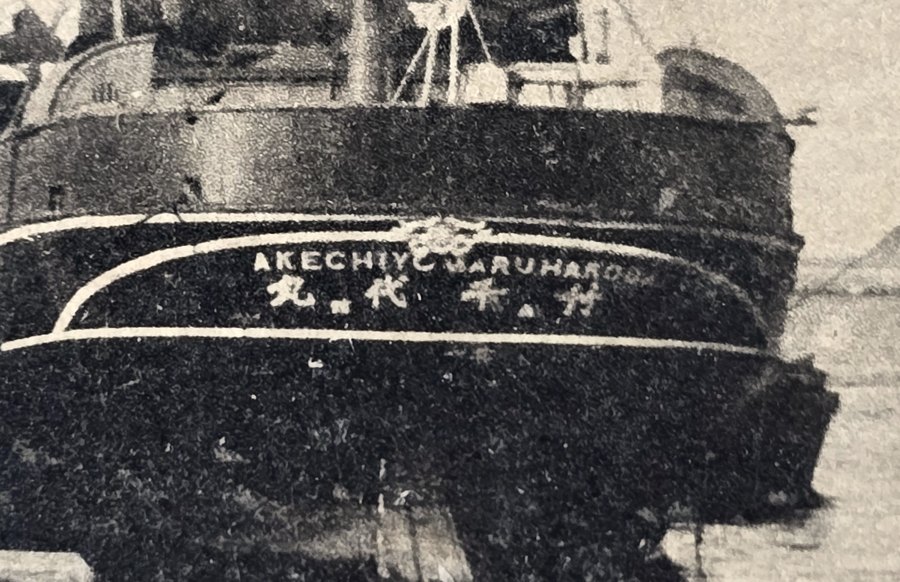
- 1854A Russian survey names the bay Port Lazarev
- 1880Wonsan opens as a trade port; a Japanese consulate opens the same month
- 1904Russo-Japanese War: Japan builds twelve batteries around Yonghung Bay (from August)
- 1905The Yonghung Bay Fortress Command is set up at Wonsan (May)
- <1933This card is printed, inspected, and never mailed (estimated)
- todayWonsan is in North Korea — a naval port again, closed to most of the world
The army inspected the ships, the pier and the shoreline in this picture. No one asked the man in white where he was going. He is not looking at the ships — he is just on his way somewhere. Another man in white walks up to a mountain hermitage in Exhibit 03.
군은 사진 속 배와 부두와 해안을 검사했지만, 흰옷 입은 남자에게 어디 가느냐고 묻는 이는 없었습니다. 그는 배를 보지 않고 제 갈 길을 갑니다.
→ Exhibit 03 · A timetable home from the Diamond MountainsTwo women, sent to say congratulations
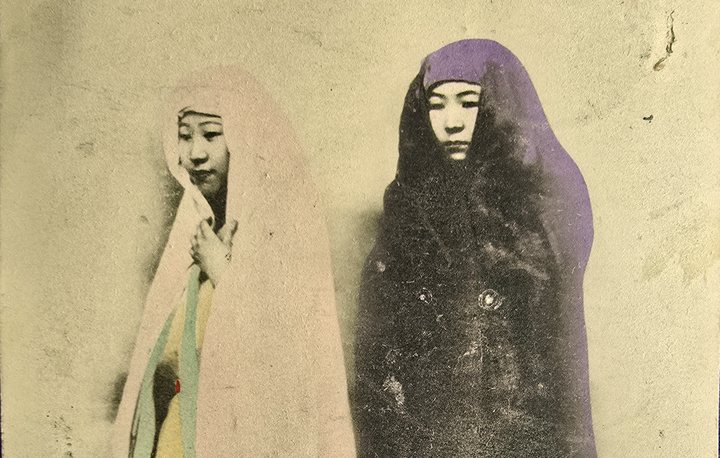
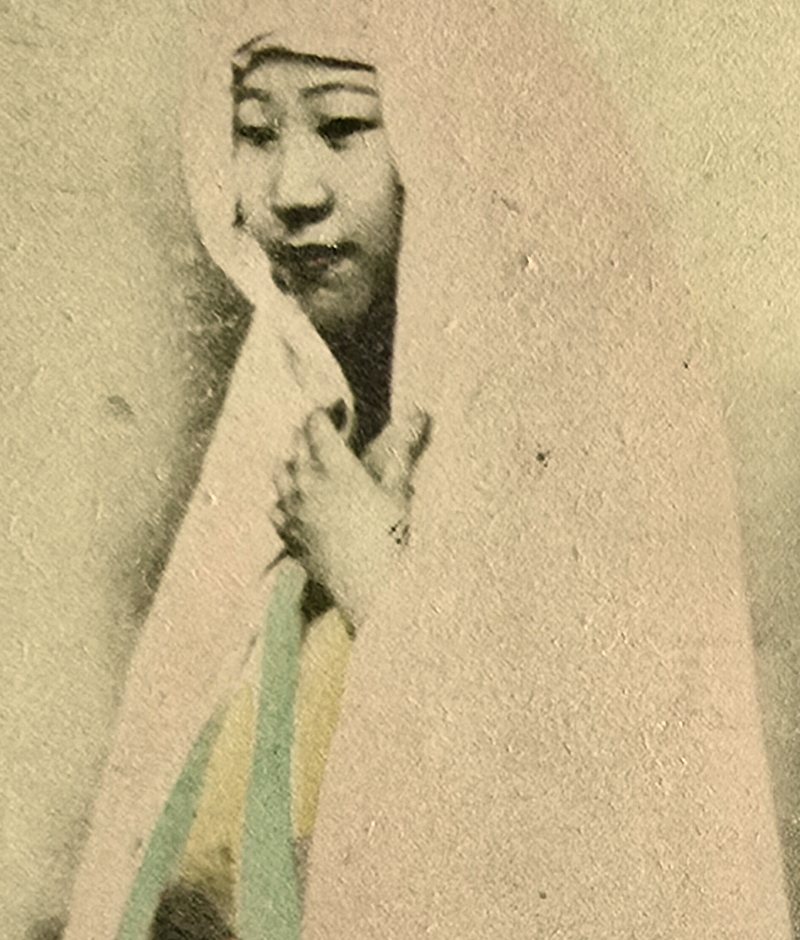
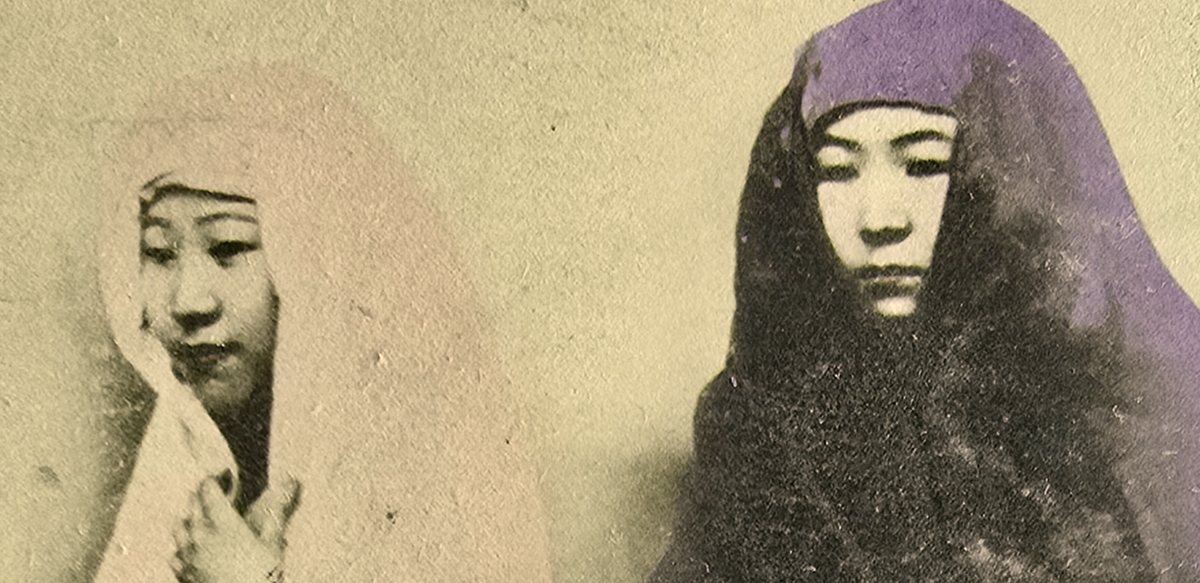
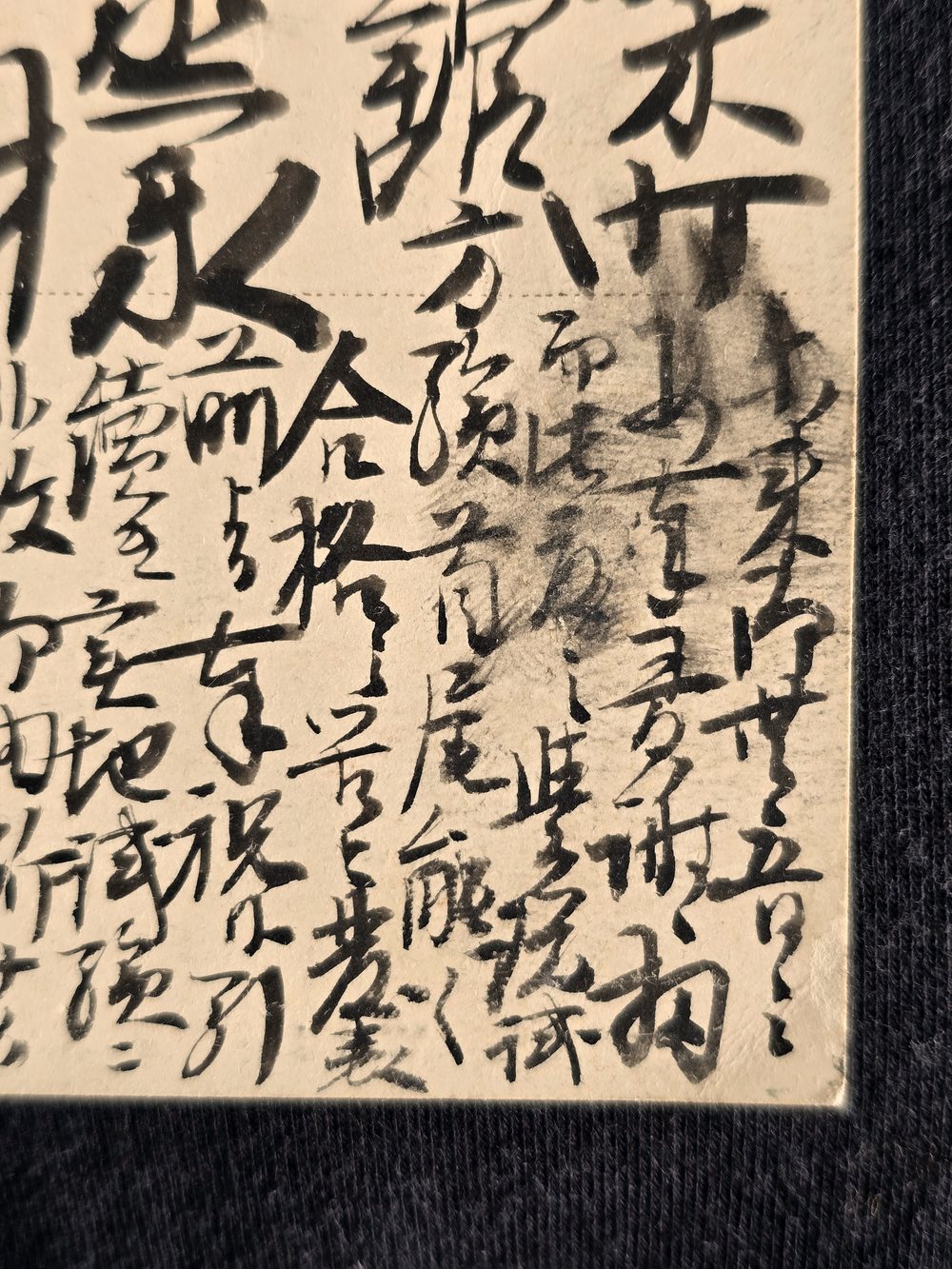
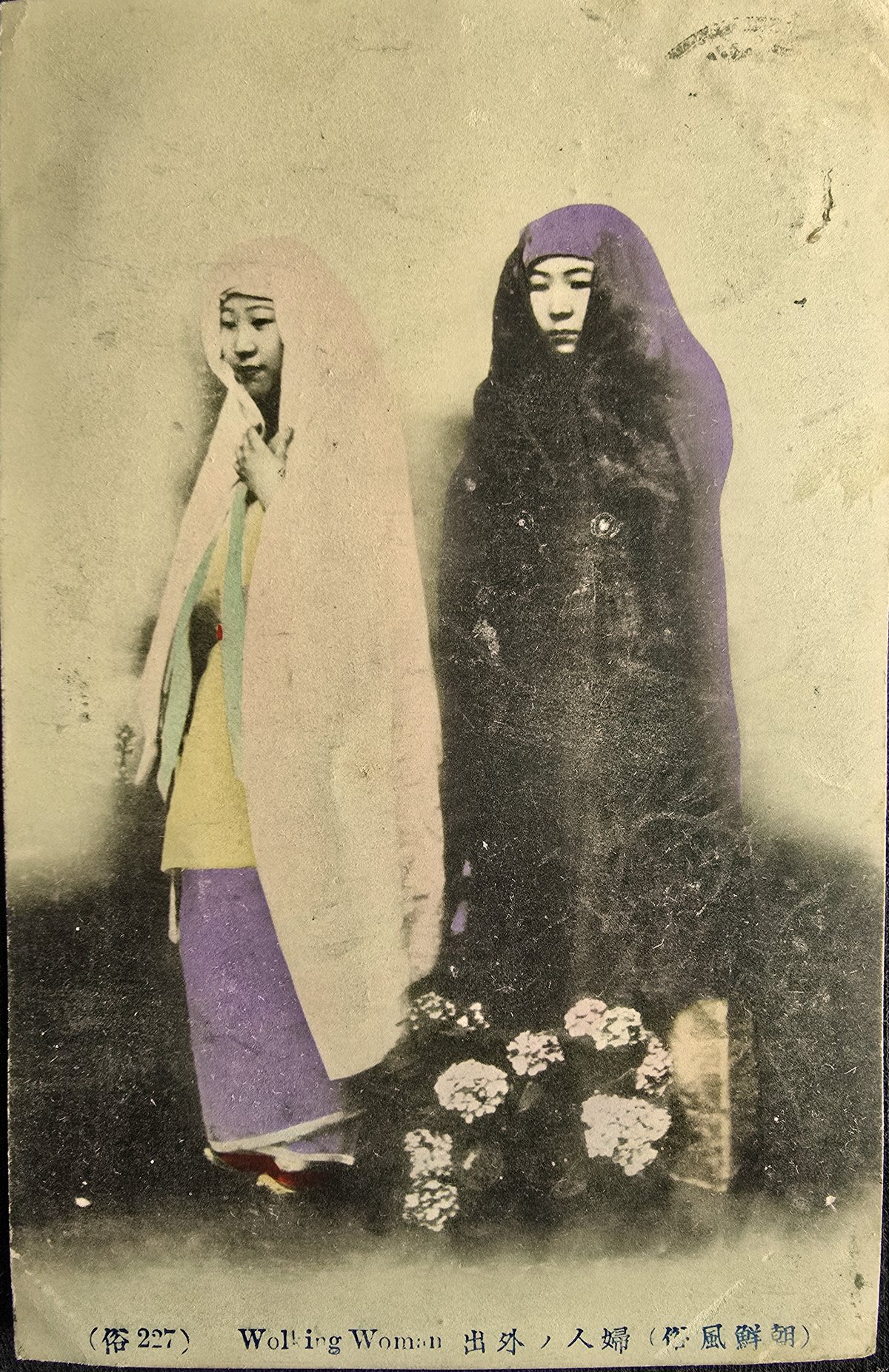
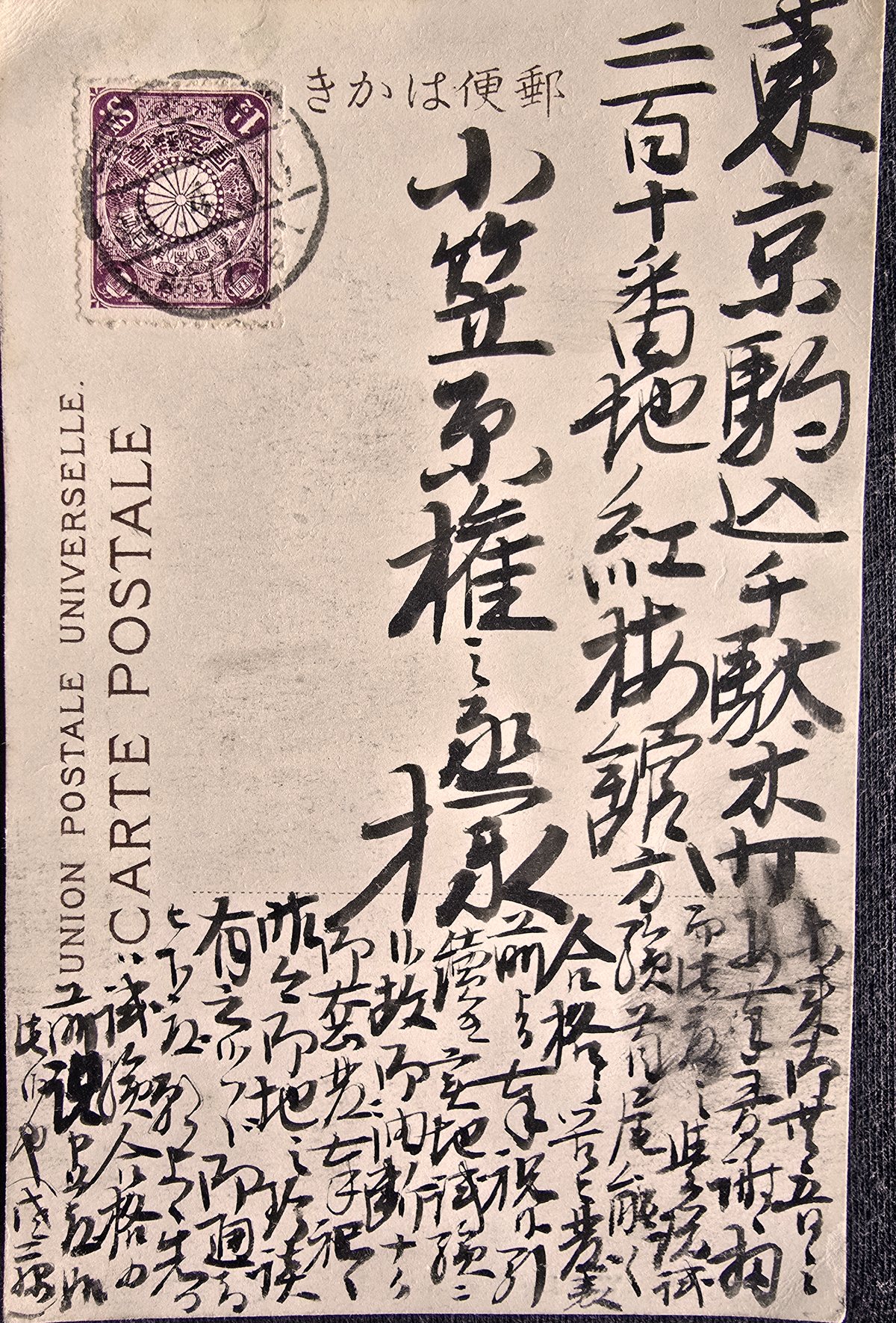
Two women stand covered from head to knee, only their faces showing. In old Korea a woman going out hid her face from men outside her family — naeoe — and veils such as the jangot were held shut by hand, as the woman on the left does at her chin. Yet here both faces turn to a camera. Flowers at their feet, a plain studio backdrop and hand-painted colours suggest the "outing" was posed. The card was sold with a Japanese caption: "Korean customs, no. 227." On the back, a Japanese sender wrote to a medical student in Tokyo to congratulate him on passing an exam. The message never mentions the two women.
두 여인이 머리부터 무릎까지 쓰개를 쓰고 얼굴만 내놓았습니다. 옛 한국에서 여인은 외출할 때 집안 밖 남자에게 얼굴을 가렸고(내외), 장옷 같은 쓰개는 왼쪽 여인처럼 턱 밑에서 손으로 여며 쥐었습니다. 그런데 두 얼굴은 카메라를 향합니다. 발치의 꽃, 사진관의 무지 배경, 손으로 칠한 색을 보면 이 '나들이'는 연출로 보입니다. 엽서는 「조선풍속 227번」이라는 일본어 설명을 달고 팔렸습니다. 뒷면에는 한 일본인이 도쿄의 의학생에게 시험 합격을 축하하는 글을 썼습니다. 그 글에 두 여인 이야기는 한마디도 없습니다.
- Picture(朝鮮風俗) 婦人ノ外出 — "Korean customs: a woman going out", printed right to left. English caption "Walking Woman". Hand-coloured photograph; publisher not printed
- VeilsLong veils for going out. Whether each is a jangot or a sseugae-chima cannot be told from the picture alone uncertain
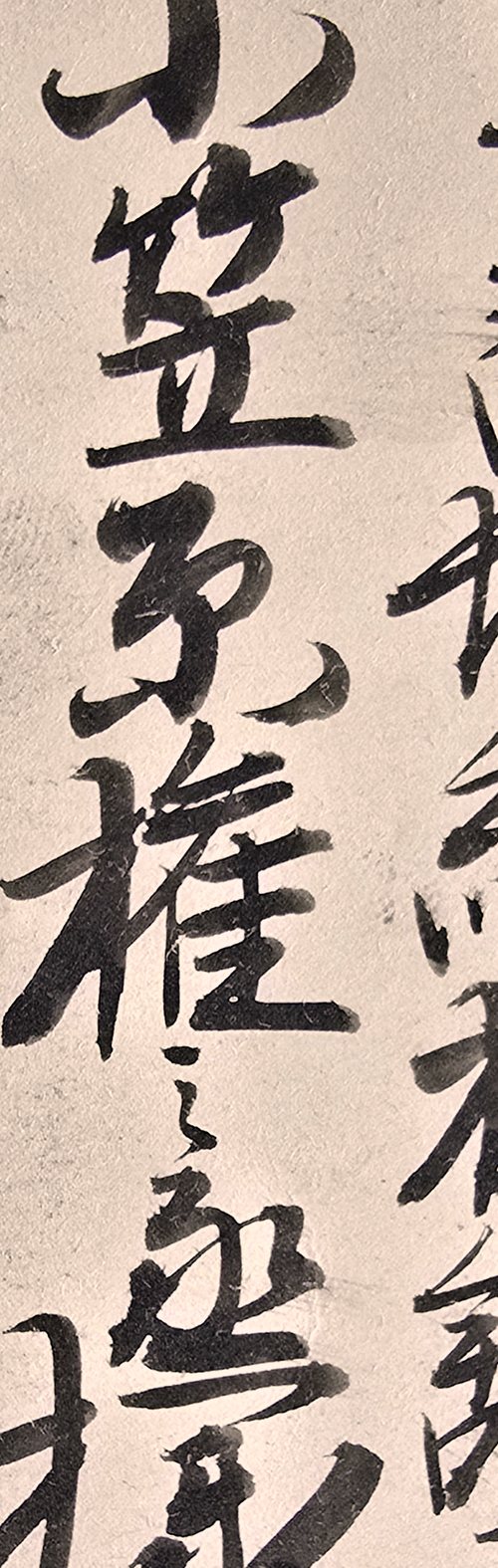
- To東京 駒込千駄木 二百十番地 … 小笠原權之丞 様 — Ogasawara Gonnojō, Komagome-Sendagi, Tokyo. The lodging name after the number may be 紅梅館 tentative
- StampChrysanthemum 1½ sen, purple. Postmark April 10; the year cannot be read
- FromA Japanese sender, writing in formal epistolary style. Signature perhaps "…三郎" (…Saburō) tentative
- DateDividing line at one third of the back → printed 1907–1918. Mailed on April 10 of 1911, 1913 or 1914 estimated
-
A veil for going out
Under the rule of naeoe, a woman going out covered herself so that men outside her family could not see her face. The jangot began as an ordinary coat worn by men and women alike, and later became a veil, its ties held together by hand. Such veils disappeared as Korea modernised.
-
Posed for strangers
Flowers, a studio backdrop and colours painted by hand: the outing was made in a photo studio and sold as a picture of "Korean customs," numbered like an entry in a catalogue. The veil kept strangers from looking. The postcard was made for strangers to look.
-
From exam to village doctor
The addressee appears in the official gazette (官報): he passed the first part of the national medical licence exam in May 1909 and the final, practical part in May 1914. By 1934 he was a village doctor in Nishitakizawa, Akita, in the north of Japan.
Why these two women?
The sender chose a picture of two veiled Korean women to say congratulations, and wrote nothing about them. Perhaps, to him, they were simply a picture of Korea. We would like to read the rest of his message.
- PostmarkApril 10 — which year? 1911, 1913 or 1914?
- Sender"…三郎"? The first characters are still unread.
- MessageLines 2–3 and the end of line 5 are blurred cursive.
- VeilIs the woman on the left wearing a jangot or a sseugae-chima?
소인의 연도, 발신인 이름, 번진 통신문, 왼쪽 여인의 쓰개가 장옷인지 쓰개치마인지 — 아시는 분은 알려 주세요.
sepiacorea@byeoldari.net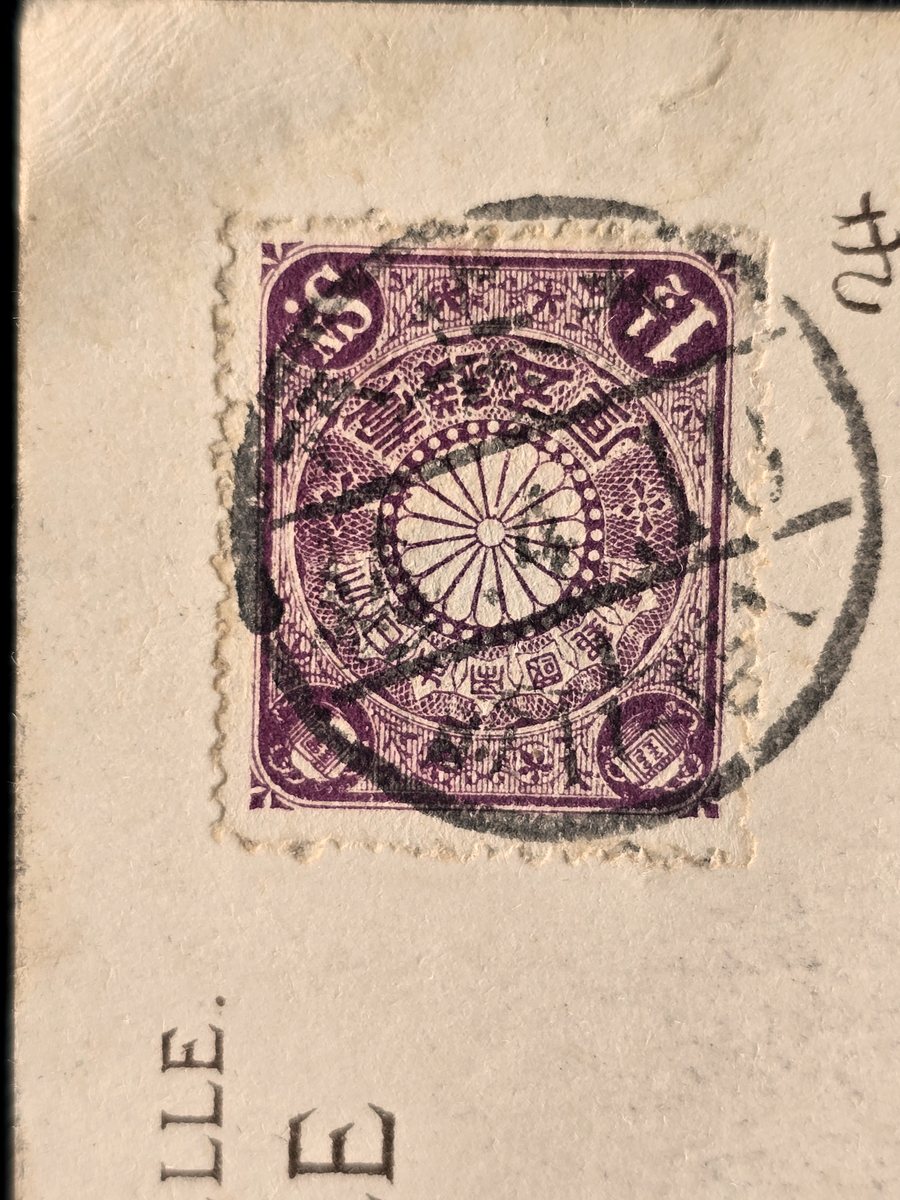
- 1909Passes the first part of the medical licence exam (Official Gazette no. 7763, May)
- 4.10This card is mailed to him in Tokyo — in 1911, 1913 or 1914
- 1913His name appears in the lists for the practical exam, again into 1914
- 1914Passes the final, practical part (Official Gazette no. 543, May)
- 1934Village doctor at his own clinic in Nishitakizawa, Akita (Nihon Iseki-roku, 1934)
The one who took the picture posed two women for strangers to look at. The one who sent it, a stranger himself, used them to say congratulations. The two women, whose names we do not know, became a picture in between. Their faces remain. Exhibit 02 has the same silence: a woman wrote from the border and never mentioned the building on the front.
찍은 이는 낯선 이가 보라고 두 여인을 세웠고, 부친 이는 그 낯선 이로서 축하 엽서로 썼습니다. 이름 모를 두 여인은 그 사이에서 '그림'이 되었습니다. 그래도 두 얼굴은 남았습니다.
→ Exhibit 02 · From the border, to a geographerMore cards in preparation
Two new cards
Two more cards from Japan, arrived in November 2026, are being read and photographed. Each will be shown here one at a time.
Collectors, dealers and museums
If you hold related cards, can help read the handwriting, or would like to see a card in person, please write.
관련 엽서를 갖고 계시거나 판독을 도와주실 수 있는 분, 실물을 보고 싶은 분은 연락 주세요.
sepiacorea@byeoldari.net